




The questions your agency should be asking you (and the one it shouldn't)


You are comparing three agencies. The proposals look interchangeable: same phases, same deliverables, same reassuring language about collaborative discovery. Proposals are written to survive comparison, so they will tell you little about which engagement goes wrong. The intake will, inside twenty minutes. Watch what each agency asks you for. Then watch whether any of them asks you to do their hardest job for them.
Most buyers in this position arrived by one of six routes: a repositioning, a new marketing lead who inherited a site they dislike, a launch with a date attached, an outgrown platform, an enterprise migration, or an agency breakup that turned into a comparison process. A good intake works out which one you are, because that answer changes scope more than any page count does.
The stakes are documented. A Nielsen Norman Group survey of practitioners counted 4 failures among projects that ran a discovery phase against 16 among projects that skipped it, and 83 successes against 52. Failure risk down 75 percent, chance of success up 59 percent. Read those counts honestly: discovery is insurance against disaster more than a promise of triumph.
What follows is our own intake, published in full, offered as a grading instrument. Use it on us. Use it on everyone else you are talking to.
Do they have two stages, or one form?
A competent intake runs in two stages, at two different moments. Most agencies compress them into a single questionnaire because one form is cheaper to send. Stage one happens before anything is signed and decides whether you should work together at all. Stage two happens after signature and decides whether anyone will ever be able to prove the work paid off.
Stage one, pre-signature, qualifies and diagnoses:
- Describe what you do in one sentence, in your own words. How did this start?
- What works about your current site, and what embarrasses you about it?
- Name three competitors you respect or fear. Where do you win, and where do you lose?
- Who owns copy and content on your side?
- What do security review, procurement, and your DPA require?
- What are your goals, as numbers, per quarter?
Stage two, post-signature, captures the baseline:
- What does success look like at 6 to 12 months, and what would make it a home run?
- Which numbers do you actually report internally?
- Current traffic, conversion, revenue band, and pipeline attributable to the site.
- Why did the last site or agency fail you, and what is that costing you today?
- Upcoming events with dates. Who decides. Whether we may name you later.
An agency that runs stage two questions before signing is selling. An agency that skips them entirely will have nothing to show you in nine months, because nobody captured the before-state.
One honesty note before you grade anyone against this list. It comes from a documented rebuild of our own intake, run over several weeks in July and August 2026. The question set is settled. The system around it is still being built, and the limits section below says more about that.
Do they ask you things only you could know?
Every intake question should return information that exists only in your head or on your calendar. If a machine can fetch it, being asked for it means one of two things: the agency lacks the tooling to fetch it, or it has the tooling and did not bother.
Run any intake form you have received through that filter.

Two rules make this filter workable in practice. The first: never make the customer repeat what they already told us. Anything said on a sales call gets confirmed in passing at most, and the intake conversation spends its time on the gaps. The second rule licenses the uncomfortable questions. Decline to share your revenue band and that decline gets recorded as a finding. A competent agency will tell you exactly that before asking.

Which single question tells them the most?
"What works about your current site, and what embarrasses you about it?" has outperformed every requirements question we have tried. A requirements list is a list of solutions. Embarrassment reliably returns a problem, because it is felt before it is diagnosed, and it is felt most sharply by the person who has to send the link to a prospect.
The mechanism sits in something we have already published. People describe what they think will fix their problem, because they cannot see the constraints you can. A team sees low demo conversions and concludes it needs a better call to action, when the page may be failing to establish trust before it asks, or paid search may be delivering the wrong audience. We wrote about that pattern in Who Are You Actually Designing For? Treat the surface request as the real problem and every design decision downstream gets optimized for the wrong thing.
On provenance: emotional and first-impression questions are established discovery practice. Agencies have asked versions of them for years, and we claim a sharpening here, no more. The word "embarrassed" pulls answers that "what would you improve" never reaches.
The runner-up is the competitor question. "Who are your competitors?" returns the map from your pitch deck. "Three competitors you respect or fear" returns the honest list, and "where do you win, where do you lose" forces a concession. We research the competitive field ourselves afterward. The question exists for what only you know about it.
Do they connect your data, or ask you to remember it?
At kickoff, a competent partner asks for exactly three access grants, then stops asking you performance questions: GA4 viewer access, a Google Tag Manager container, and a Search Console property. Watch for the discipline of refusal as much as the request itself. Ours is a hard rule: scope is exactly three, and we resist adding a fourth per customer.
Then ask what they capture on day zero and where it is archived. We baseline every customer's organic traffic, AI-referred traffic, conversions, and real-user speed from day one, from independent sources, alongside monthly search history and an archived capture of the site before we touched it. Most agencies cannot show receipts nine months later because the before-state was never recorded.
If you have none of these tools installed, that absence is itself the baseline. It is a finding. It also means nobody can currently prove what the site does, including you.
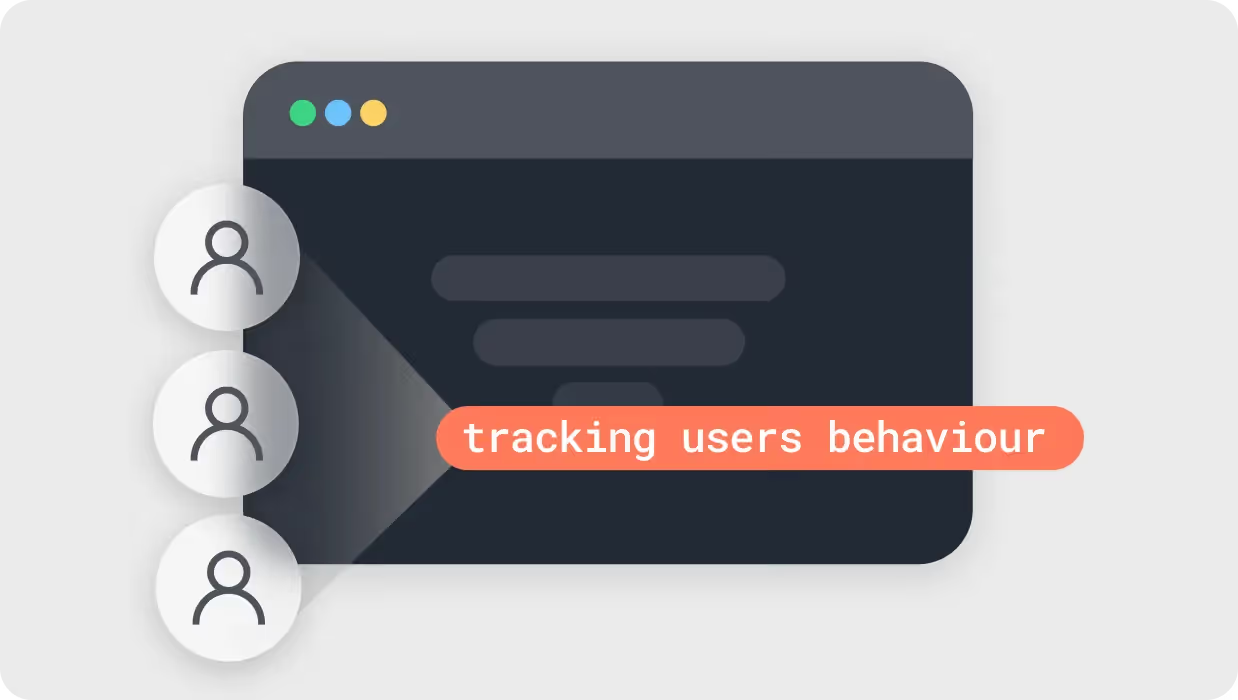
The counterintuitive part is why the connections matter even when you already have dashboards. Connecting the data is how you discover the data is wrong, before it becomes the number everyone argues about at launch. Large gaps between GA4 and Search Console usually trace to consent banners, ad blockers, or misconfigured events. A typo in a measurement ID sends data nowhere, silently. We covered the plumbing in Tracking User Behavior on Your Website in Webflow and the case for measuring at all in Why performance analysis is crucial to improve your SaaS website's success.
Do they ask about security review and content ownership?
Two questions that look like paperwork behave like scope. For a B2B SaaS company selling upmarket, security review is schedule risk. An Optifai analysis of 939 B2B SaaS companies with stage-level CRM data found security questionnaires standard even in mid-market deals, with SOC 2, GDPR, and vendor risk assessments adding 2 to 4 weeks to the average cycle. The same data shows cycles running 22 percent longer than in 2022, with the average buying committee grown from 5.4 stakeholders to 6.8. A separate conversation analysis published by Plain found that in larger evaluations, SOC 2, GDPR, and SSO questions arrive early, from a dedicated security reviewer rather than the buying team itself.
Here is the connection to your website. If your deals stall in security review, enterprise buyers are landing on your site hunting for trust signals, and your procurement team has opinions about which scripts may run on it. Both change scope. Neither appears on a sitemap.
One KPI worth stealing from our own intake records: "enterprise security reviews passed per quarter" as a website goal. It treats the site as sales infrastructure serving a long, committee-driven, security-gated cycle.
Content ownership is the other question. "No internal copy or content owner" sits on our recorded list of poor-fit signals, weighted as heavily as any positive signal. It occasionally ends a conversation in week zero. A conversation that ends in week zero is far cheaper than one that ends in month three.
The one thing they shouldn't ask you for
We never ask a prospect to produce a sitemap.
Consider what the request outsources. Site architecture is the hardest judgment call in the whole project, and "send us your sitemap" hands it to the person with the most internal politics and the least user evidence. Anyone on the team building the product is already conditioned to group information a certain way. You know the org chart, the schema, the internal jargon. Your users know none of it, and the distance between those two mental models is exactly where navigation fails. A customer-drawn sitemap renders the org chart as navigation, which is the failure mode the discipline exists to prevent.
The industry quietly admits this. Agencies routinely write the requirements document for the customer during discovery, then treat it as the customer's brief. Even guidance written for buyers recommends listing pages as a current understanding, explicitly short of a final sitemap.
Here is what replaces it in our process: we draw the tree, you take a highlighter to it. We propose the structure with reasoning attached, and you react node by node: keep, kill, missing, comment. Your existing sitemap is welcome as input to that tree, and it stays input. Reacting to a proposal is a task anyone close to the business can do well. Originating a structure from a blank page is a task nobody can do well, including us, until the evidence is in. One caveat for accuracy: the node-by-node review interface described here is designed and in pilot, and we will say so to anyone who asks.

The political objection has a practical answer. Stakeholders can set direction, let designers generate the options, and check in at key points, with buy-in intact. Participation carries the buy-in. Authorship of the deliverable adds committee navigation on top of it.
When this checklist will steer you wrong
Five honest limits, because this piece asks you to grade other people.
First, a short intake sets direction and qualifies fit. Enterprise builds still need documented requirements for CRM, ERP, SSO, and analytics integrations, plus performance, security, compliance, and hosting constraints. That documentation lands later, at the strategy call and kickoff. An agency whose entire discovery is six questions has a different problem than one whose intake opens with your sitemap.
Second, we are grading against our own instrument. This intake was redesigned by us and assessed by us, with no measured before-and-after on scope drift, rework, or overruns. Parts of the surrounding system remain unfinished: the question set is settled, while ownership of the build and the tool that holds the artifacts are still open. Treat this article as a designed argument with the reasoning exposed. Ask us again once we have built the measurement.
Third, our three-tool standardization has a hard edge. We work on Google's stack and we do not integrate Adobe, Amplitude, Plausible, or a privacy-first EU setup. That constraint is what makes baselines comparable across every customer and the monthly refresh automatic, and it costs us prospects who run something else. The irony is on record: our own DPA question points straight at the customers most likely to be off Google.
Fourth, asking for access is easy and getting it is hard. The design burden sits on making the granting easy: a capped number of customer actions, live status on every grant, one named decision owner, and a pre-brief so nothing already answered gets asked twice. Most delay in a website project originates on the customer side, in feedback rounds and resourcing, and an intake that ignores that fact is decorative.
Fifth, you can run this entire list without us. Any agency could copy it this afternoon. The questions are downstream of the machinery: transcript ingestion so nothing gets re-asked, the day-zero evidence harvest, the archived before-state. The list travels easily. The system that makes it cheap to honor is the part that resists copying.
Where to start
If you are mid-comparison, run these tests on every agency in the room, ours included. And if you want to see the fetching before you sign anything, ask us for a website audit. We pull your baseline, your technical state, and your measurement gaps from independent sources, before a single line of scope gets written. Diagnose first. Then scope.




Make your next move. Today.
Momentum is created in the first conversation. When the energy matches, everything else accelerates.


Frequently asked questions.
What should I prepare before a first call with a web agency?

Should I share our current sitemap with an agency?
Is a long intake questionnaire from an agency a red flag?
How do I know an agency will be able to prove results later?
What if my stakeholders expect to sign off on site structure?


Who Are You Actually Designing For? The Question B2B SaaS Teams Get Wrong
Most SaaS teams design for the user and miss the buyer entirely. This article breaks down the difference between user and customer in B2B SaaS, why personas fall short, and what it means for your website, messaging, and conversion rate.