

-p-500.webp)


How we set up AI design systems for B2B SaaS teams

AI amplifies what is already there. A strong brand system fed into the right tools produces output at a speed and volume that simply was not possible before. An unstructured input produces results that look like everything else.
At Noco, we have spent the last year building that foundation for ourselves and figuring out exactly what it takes to do it properly. Now we do it for customers.
How we think about AI
Our philosophy on AI has been consistent since the beginning: use it to the maximum of its abilities, with human creativity and judgment at the top of every output.
AI removes friction. It generates variations at speed, explores directions that would take a human designer a day, and handles the volume of work that no team has the headcount to absorb manually. We use it across every part of how we work.
The role of a designer, and the role of an agency, is shifting toward curation and refinement. AI clears the ground and generates the options. Human taste, judgment, and craft determine what is actually good and what gets refined into something worth shipping. That balance is something we think about carefully on every project.
The practical result is that for the same investment, we can now go wider, go deeper, and deliver at higher volume. The work that used to require more time or more headcount runs faster. The capacity that matters goes toward decisions that genuinely require it.
What this means for your content workflow
Every B2B SaaS team has the same underlying problem. Design capacity is finite. The list of things that need designing is not.
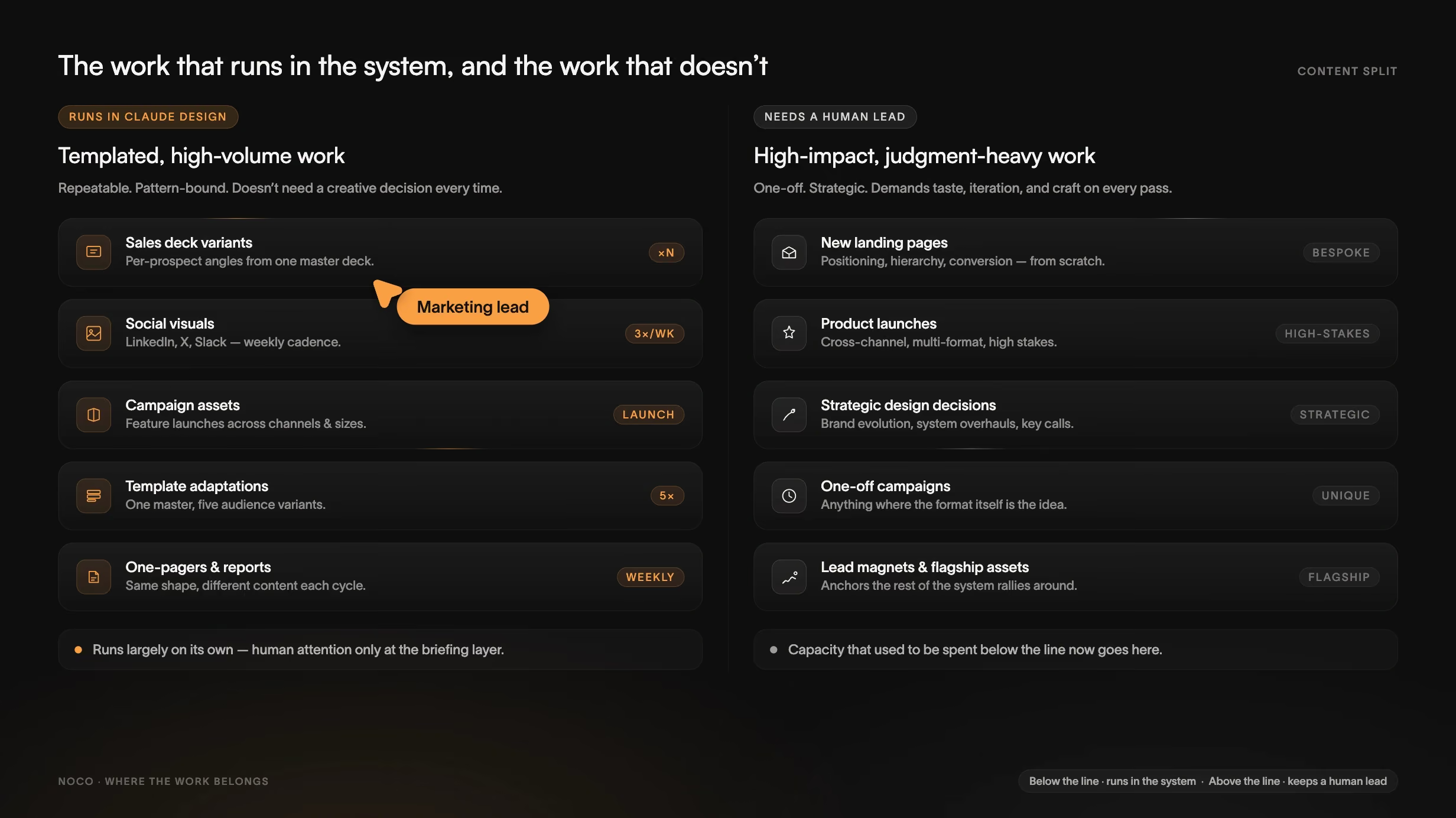
Slide deck variants for every sales conversation. Social visuals that need to go out three times a week. Campaign assets for a new feature launch. A template that needs to be adapted for five different audiences. These tasks are real, they take time, and they eat into the capacity that should be going toward the work that actually moves the needle.
The answer is to build a system where the repetitive, templated, high-volume layer runs largely on its own, and human attention goes to the decisions that require it.
That is what a properly configured AI design system does. The high-impact work still needs a human lead. New landing pages, lead magnets, product launch visuals, one-off campaigns: those require judgment, craft, and iteration. Everything below that line, the work that follows a template, that runs at volume, that does not need a creative decision every time, belongs in the system.
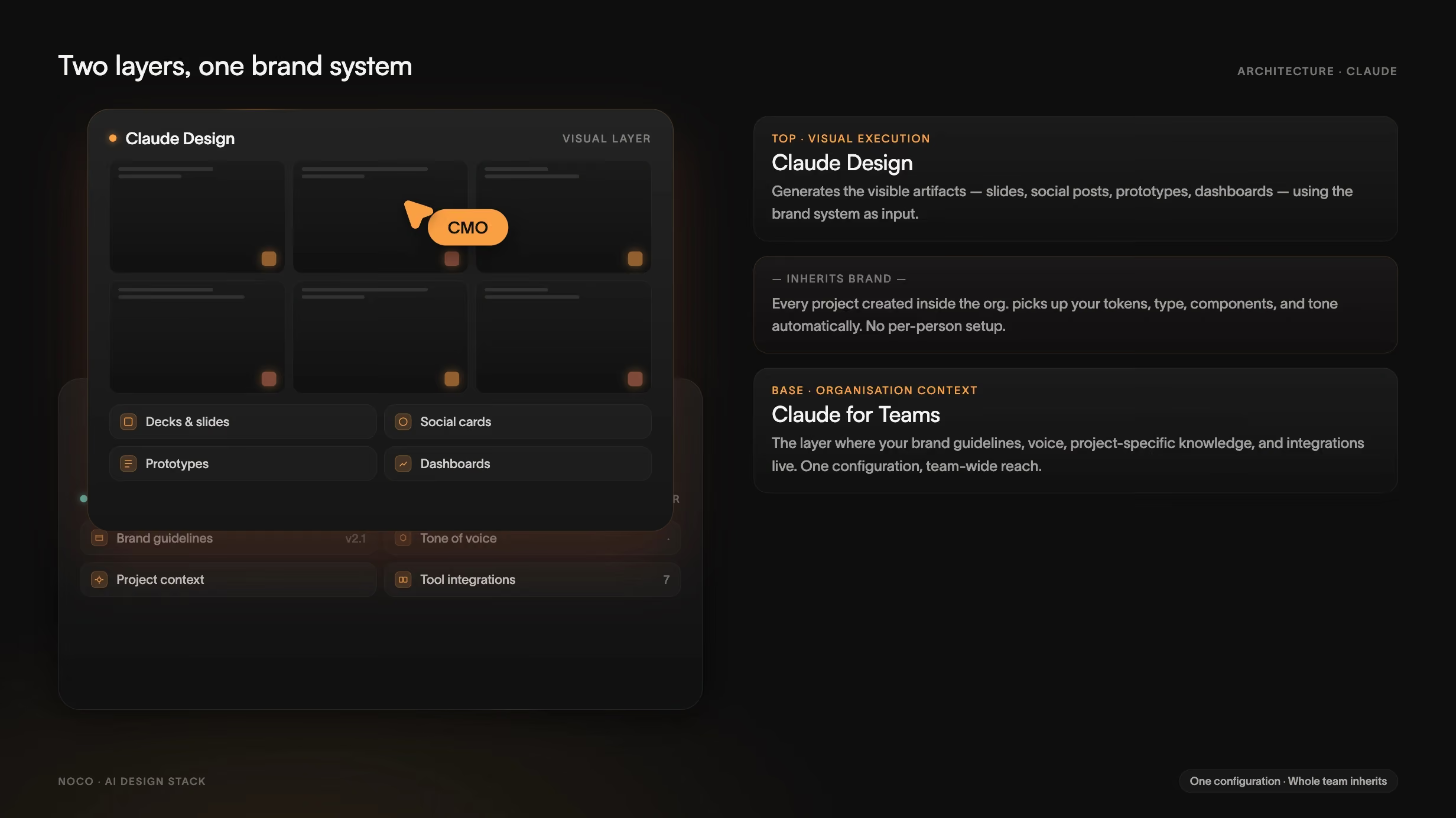
Claude Design and Claude for Teams
Claude Design is Anthropic's AI design tool. It generates slide decks, prototypes, dashboards, and marketing assets from a plain-English prompt. The output quality is genuinely strong, but only when the tool has a real brand system to work from.
During setup, you upload the assets that define your brand: color tokens, typography specifications, component patterns, style references, brand guidelines. Claude extracts a reusable design system from those inputs and applies it to everything generated within your organisation. Every project your team creates after that inherits your brand automatically.
Claude Design works as a standalone tool. If you set up the brand system properly, even a single person can generate on-brand output consistently. But the real unlock happens at the team level.
Claude for Teams is what makes the system scale. Once the design system is configured and published inside a Teams organisation, every team member's projects inherit it automatically. No individual setup, no inconsistency, no one going off-brand because they skipped a step. One setup, team-wide consistency from day one. For a B2B SaaS marketing team churning out assets across multiple people and channels, that is the difference between a useful tool and an actual content system.
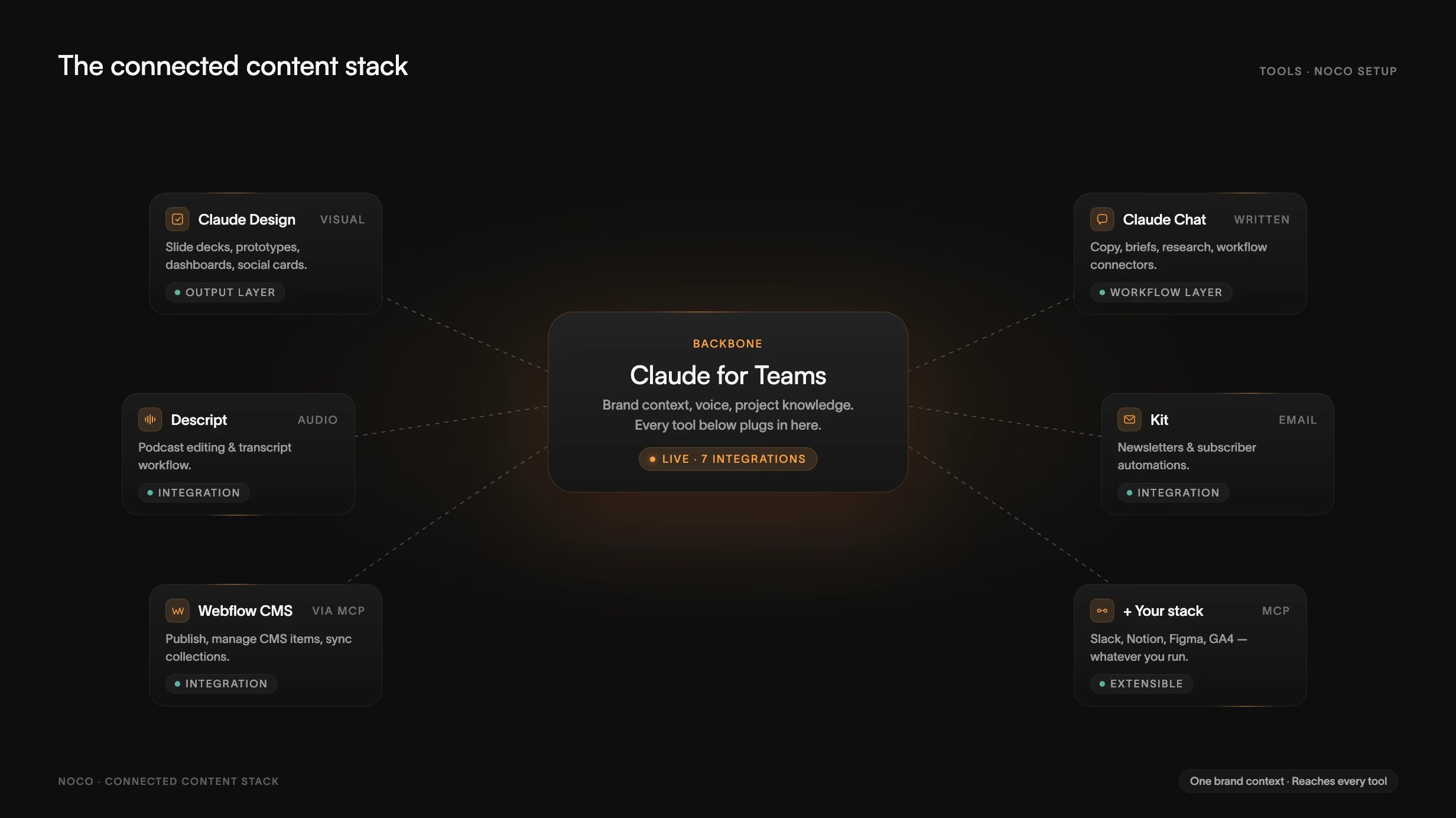
Claude for Teams is also the backbone of the broader stack. It is the layer where your organisation's context lives: brand guidelines, tone of voice, project-specific knowledge, and integrations with your existing tools. Claude Design sits on top as the visual execution layer. Claude Chat handles the written and workflow layer, connected to whichever tools your team already runs. For Noco, that stack connects to Descript for our podcast workflow, Kit for newsletters, our Webflow CMS via MCP, and more. The same setup works for any B2B SaaS team running a modern content motion.
Where the setup goes wrong
Claude Design does not come configured for your brand. Out of the box, it generates from its training data, which means it produces the most statistically common version of whatever you asked for.
Most teams upload a logo and a brand PDF, get output that looks vaguely on-brand, and assume that is as good as it gets. It is not.
A properly configured system requires structured input: color tokens with exact hex values and usage rules, typography specifications with the full scale and weight hierarchy, spacing and layout logic, component patterns that match how your brand actually behaves, style references that show Claude what good looks like in your specific context. The more precise and structured the input, the more reliably on-brand the output.
This is the part that takes expertise. Not because the tool is difficult, but because building that structured input requires a level of brand thinking that most teams either have not done yet or have not codified in a usable format.
Where Noco's work connects naturally
A website sprint or Brand Sprint produces a codified visual system as a natural output. Colors locked. Typography defined. Components built. Visual logic documented in Figma. That work already exists for most Noco customers.
Translating that system into Claude Design is the next step. The raw material is already there. What it needs is someone who understands both the brand and the tool well enough to structure the input correctly and validate that the output is actually on-brand before the team starts using it.
That is what we do.
What the process looks like
We start with a brand maturity assessment. A weak or inconsistent brand foundation does not get better when you put AI on top of it. Teams that need to sharpen their brand first will move through a Brand Sprint or a focused engagement under our DESIGN subscription before we touch the AI setup.
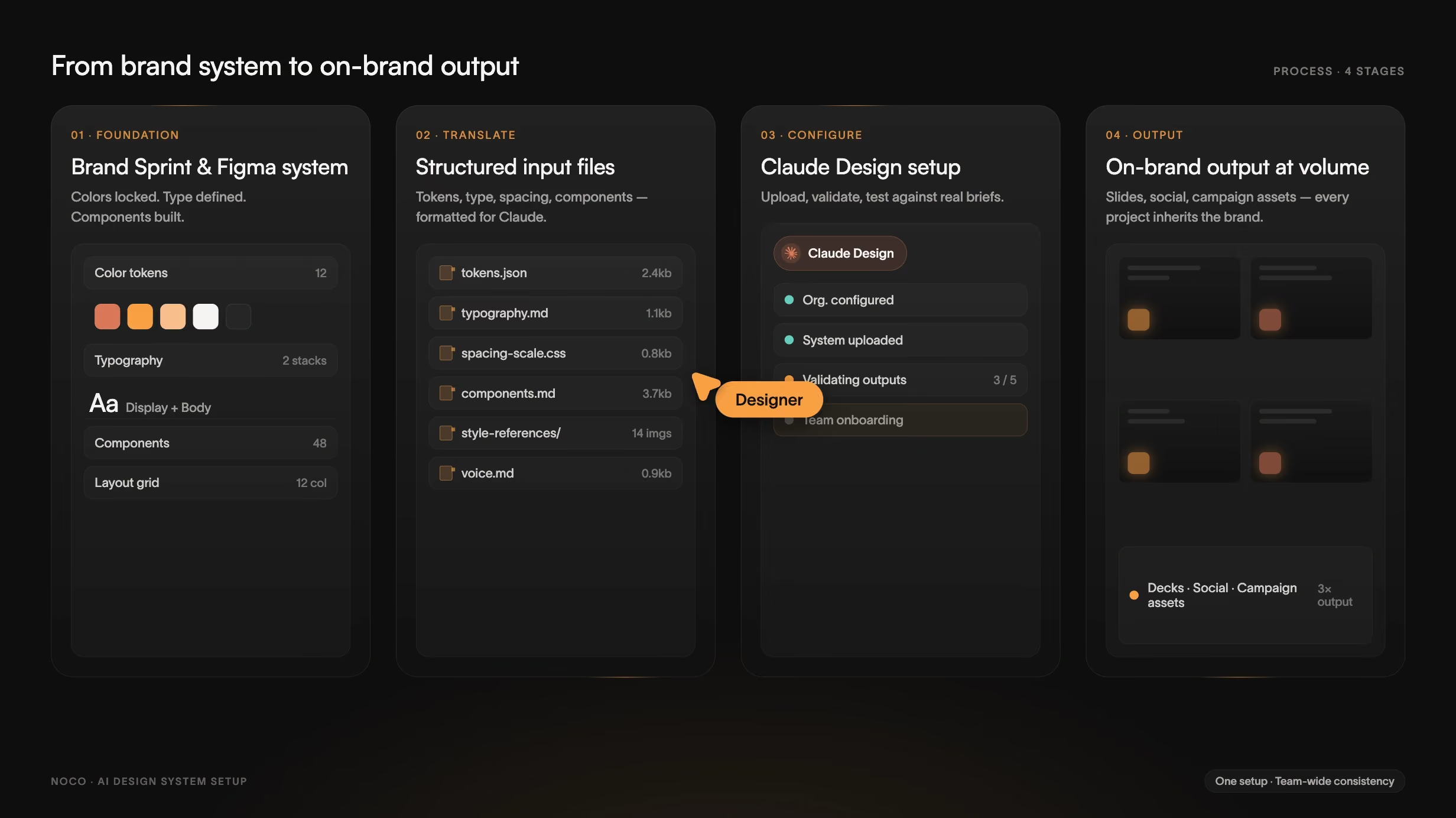
From there, we extract and structure the design system. Color tokens, typography specifications, spacing rules, component patterns, style references, everything that defines how the brand behaves visually, structured in a format Claude Design can reliably parse.
We then configure the Claude Design organisation, upload and validate the system, and test outputs against real use cases until it is consistently producing on-brand results.
As part of the same engagement, we assess the broader tool stack. Claude for Teams connects to a lot. Not every integration adds value for every team, and not every team is ready to use all of it from day one. We map what the customer already runs and identify where Claude actually removes friction.
Finally, we onboard the team. Which tasks belong in Claude Design, which still need a human lead, how to prompt effectively, how to iterate on outputs. That knowledge transfer is what determines whether the system gets used or sits idle.
On not gatekeeping
There are agencies that protect their position by keeping customers dependent. We think that approach is increasingly irrelevant.
The market is moving too fast. Every week brings new tools and new capabilities. Trying to hold a position by limiting what customers can do on their own is a losing strategy.
Our position is the opposite. We set customers up to move faster. We remove friction, transfer knowledge, and build systems that run without us in the room.
The work that genuinely requires expertise comes to us anyway. The strategic decisions, the complex Webflow Enterprise builds, the high-stakes launches, the bigger sprints. That is exactly what we are seeing as we deepen our involvement as an embedded growth partner for scaling B2B SaaS teams. The more self-sufficient a customer's team becomes at the operational layer, the more clearly they see the value of having Noco at the strategic and technical layer.
For our DESIGN subscription customers, this is also simply about creating more value within the same engagement. AI means we can do more in the same time, go deeper on the work that matters, and deliver a higher volume of output without increasing the price point. That is what abundance looks like in a productized service model.
Trust compounds. Dependency does not.
This is something we now offer
We set up AI design systems for B2B SaaS teams as a structured service. It sits naturally after a Brand Sprint or website sprint, but it can also be scoped as a standalone engagement for teams that already have a solid brand and want to activate it inside their AI content stack.
We keep the details between us and the teams we work with. If you want to understand what the process looks like for your situation, reach out at noco.agency.




Make your next move. Today.
Momentum is created in the first conversation. When the energy matches, everything else accelerates.

.webp)
Frequently asked questions.
What does Noco do?

Do you support AEO and AI search?
What is a DESIGN subscription, in plain English?
Who is Noco for?
What happens after launch?


Who Are You Actually Designing For? The Question B2B SaaS Teams Get Wrong
Most SaaS teams design for the user and miss the buyer entirely. This article breaks down the difference between user and customer in B2B SaaS, why personas fall short, and what it means for your website, messaging, and conversion rate.
Claude to Figma is not a Shortcut. It's a Shift in How We Validate Design.
Claude to Figma speeds up design execution, but it does not replace design thinking. This article explains how AI shifts the process from creation to validation, and why structured thinking becomes more valuable as generation gets easier.


Amsterdam, NL





