


-p-500.webp)


Framer 3.0 Agents: What They Change for B2B SaaS Websites


Framer 3.0 launched on June 16, 2026 and it is the most native implementation of agentic workflows any visual website builder has shipped so far. AI agents now live directly inside the Framer canvas, where they can design pages, build components, manage CMS content, and write code on your live project. For B2B SaaS teams, the update raises a practical question: does this change where you should build your marketing site? As a Webflow Premium Partner Enterprise and official Framer partner, we work on both platforms daily. Here is our read on what shipped, why it matters, and which teams it fits.
What did Framer 3.0 actually ship?
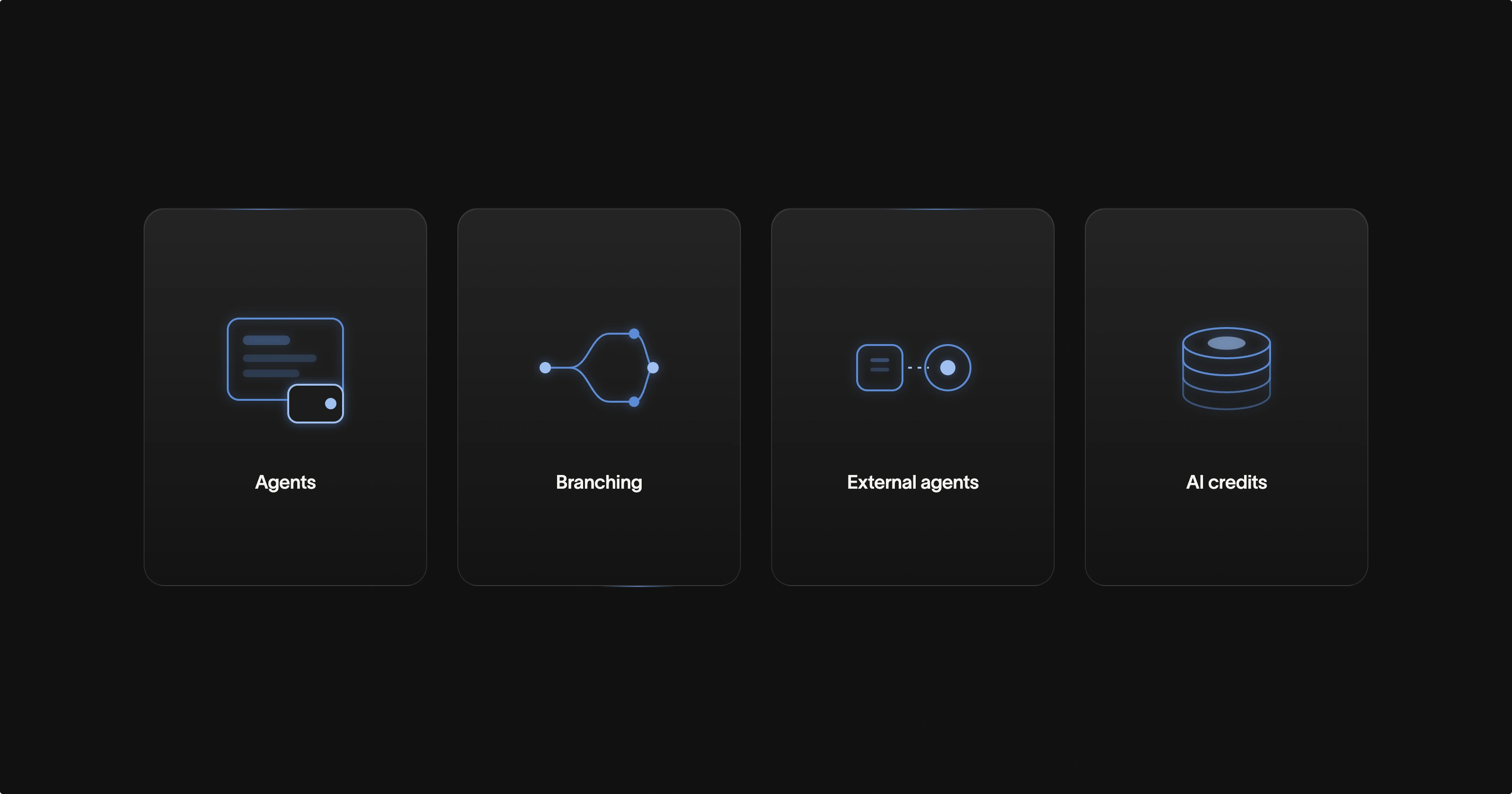
Framer 3.0 bundles four releases into one update: Agents, Branching, External Agents, and a rebuilt Community, alongside new AI credit pricing. The launch hit number one on Product Hunt and marks the point where Framer openly reframes itself as an AI-powered website workspace. The core pieces:
Why do Framer's agents feel more native than other builders'?
Framer's agents feel native because the platform was design-first from day one, and agents extend that premise instead of fighting it. Framer started as a prototyping tool. Its entire history is about shrinking the distance between an idea and a working page. Agents shrink that distance further, so the workflow feels like a natural next step rather than a feature bolted onto an existing architecture.
Compare that with Webflow's current agentic routes: the built-in AI composer and the MCP connection to Claude. Both work, and our development team uses them on client projects. In our experience they reliably get you 50 to 60 percent of the way there, covering the ground base before manual customisation takes over. That gap will close, and Webflow is shipping fast. But right now, Framer's implementation is the more seamless of the two.
One question we keep asking, and it applies to every platform adding agents: what patterns are these agents trained on? An agent inherits the build conventions of its platform. If those conventions produce heavy or inconsistent output, the agent scales that problem along with the speed. We have not seen enough production output from Framer 3.0 to judge yet. It is the first thing we are testing.
What can agents not replace?
Agents cannot replace art direction, and that changes how design budgets should be allocated rather than whether design is needed. The workflow that emerges from Framer 3.0 looks like this: a designer front-loads the creative effort into the homepage and the design system, defining typography, colour, and the components that carry the brand. Agents then propagate that direction across the remaining pages, generate breakpoints, and handle the technical work that follows any creative decision.
For B2B SaaS teams, this maps directly onto how websites actually convert. The homepage, product pages, and pricing page move pipeline. The long tail of supporting pages costs production time without moving the needle in the same way. Agents let you concentrate human creativity on the difference makers and automate the rest. Used well, this frees creative bandwidth for discovery and direction instead of cutting it.
Is Framer 3.0 a good fit for B2B SaaS websites?
Framer 3.0 fits early-stage B2B SaaS teams with design-led brands and simple content models. For teams with heavier content operations, compliance requirements, or a serious AEO strategy, Webflow remains the stronger base. The honest answer depends on stage:
.webp)
Framer's CMS handles blogs, case studies, and standard content types cleanly, but it remains lighter than Webflow's. If your growth engine is programmatic content, structured data at scale, or answer engine visibility, that gap matters more than agent speed.
How does Framer 3.0 compare to Webflow's agentic tooling?
Framer leads on agent-assisted design speed. Webflow leads on agent-assisted marketing operations. Webflow shipped a native Claude MCP connector in early 2026 and launched Webflow AEO with LLM visibility tracking and optimisation agents, positioning itself as an agentic web marketing platform. Framer's agents are strongest at the design and build layer: pages, components, breakpoints, and visual iteration.
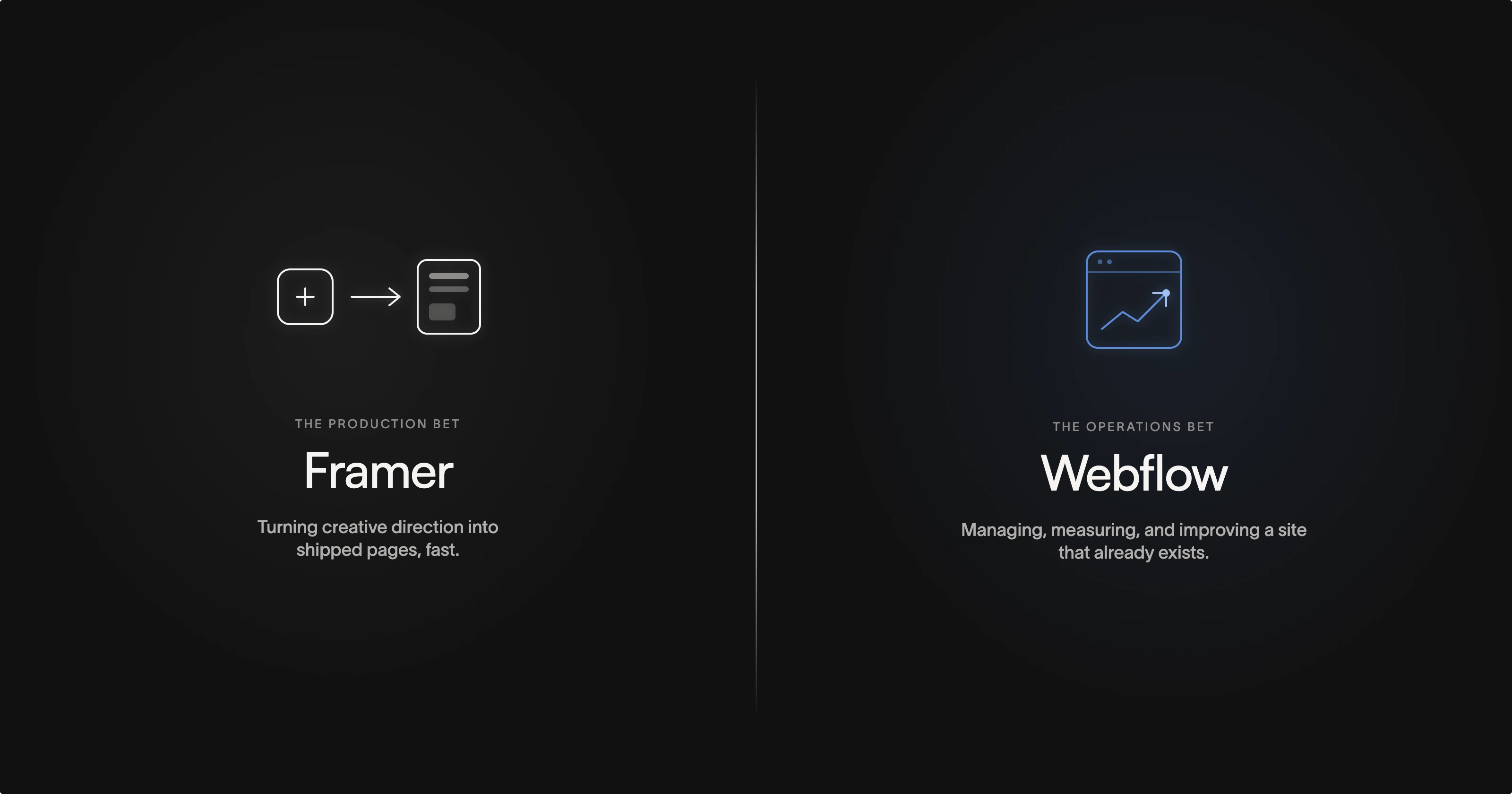
These are different bets. Framer bets that the bottleneck is production: turning creative direction into shipped pages. Webflow bets that the bottleneck is optimisation: managing, measuring, and improving a site that already exists. For most of our clients, both bottlenecks are real at different moments. That is why we hold partner status on both platforms and recommend based on the client's stage, not our preference.
Is building on Framer or Webflow a lock-in trap?
No. The lock-in argument against visual platforms has merit in theory but misjudges what growing companies actually need. Since the Framer 3.0 launch, a familiar take has resurfaced: do not build your business on a closed platform, keep everything in code, stay portable. We hear the same argument for headless CMS setups and fully vibe-coded sites.
Our counterpoint comes from working with scaleups every day. A purpose-built product comes with accountability. There is a support team, a roadmap, an SLA, and a company whose entire business depends on the platform working. When something breaks at 2 AM before a launch, someone picks up the phone. A custom stack built by one developer, or generated by an AI tool, carries none of that. And as companies scale, InfoSec and compliance teams start asking exactly these questions. Certifications, uptime guarantees, and vendor accountability stop being nice-to-haves and become procurement requirements.
Portability is a real consideration for teams that expect to migrate. For everyone else, the maturity of the product and the company behind it is worth more than theoretical flexibility.
Our take
Framer 3.0 is the strongest signal yet that agentic workflows are becoming the default for website production. It rewards teams that invest in creative direction up front and lets agents handle everything downstream of that direction. For early-stage SaaS companies, it is now a serious option. For content-driven and enterprise-grade teams, Webflow's depth still wins.
We build on both. If you are deciding where your next website should live, or how agents fit into your web workflow, book a call and we will map it against your stage and growth model. You can also run our free website audit to see where your current site stands on performance and AEO.




Make your next move. Today.
Momentum is created in the first conversation. When the energy matches, everything else accelerates.

.webp)
Frequently asked questions.
Should we choose Webflow or Framer?

Why do you use Framer for startups?
Why do you use Webflow for enterprise projects?
Do you support AEO and AI search?
Are you an official Framer partner?