



-p-500.webp)


Designing Accessible Websites: A Key Success Factor for Your SaaS Business

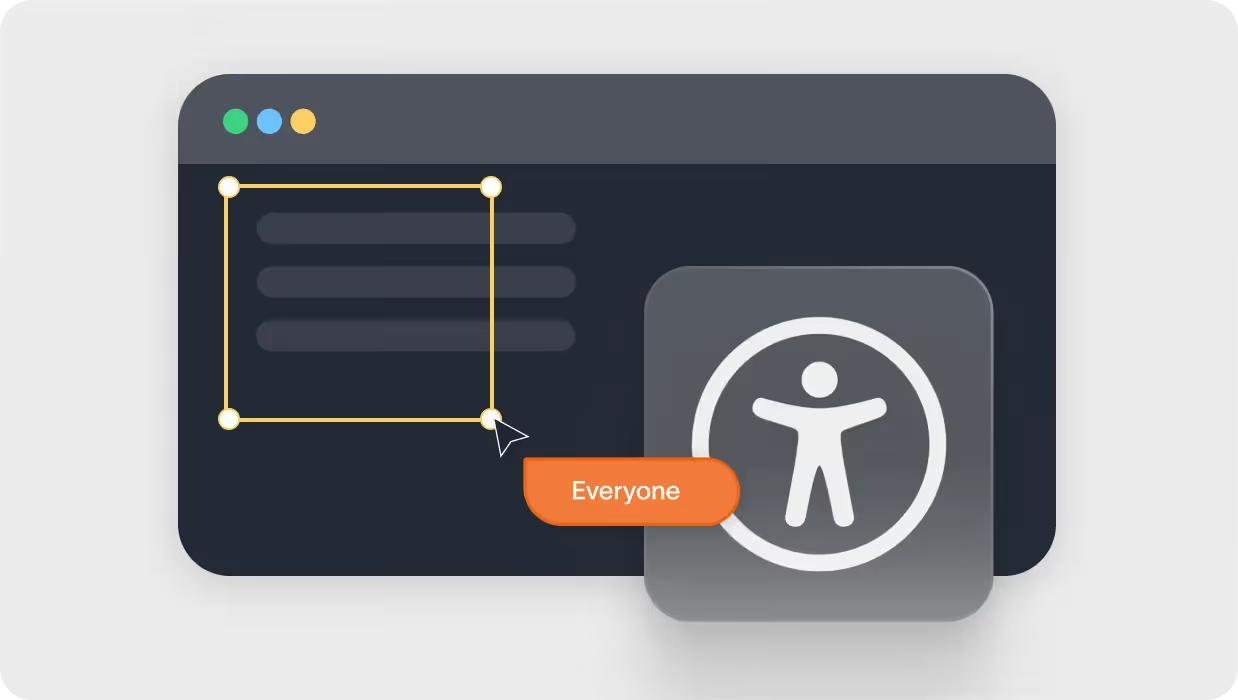
Understanding Web Accessibility Design
Web Accessibility Design refers to creating websites that everyone, including people with disabilities, can use and navigate easily. As a SaaS business owner, CMO, or Head of Growth, this should be one of your prime considerations when developing your digital platforms. After all, an accessible website is not only a moral and legal obligation but also a significant business advantage.
Creating Accessible Websites: The Key Considerations
In the realm of accessibility, certain essential factors come into play:
Visual Considerations: To cater to visually impaired users, incorporate alternative text for images, use high-contrast color schemes, and ensure your website is compatible with screen readers.
- Auditory Considerations: Closed captions for videos and transcripts for audio content make your website accessible for hearing-impaired users.
- Interactivity: Your website should be navigable using only a keyboard, catering to users who cannot use a mouse due to physical disabilities.
- Clear, Simple Language: Aim to use clear, simple language to make your content accessible to users with cognitive disabilities or non-native language speakers.
.avif)
Implementing Web Accessibility Guidelines
There are several guidelines to help you create accessible websites. The Web Content Accessibility Guidelines (WCAG) is a widely recognized resource offering specific, actionable steps for improving web accessibility.
.avif)
Challenges and Tradeoffs in Accessible Web Design
Designing for accessibility may present challenges. Balancing aesthetics with accessibility can be tricky. You might have to compromise on certain design aspects to ensure your website is accessible to everyone. Remember, the goal is inclusivity, even if it means making tough design choices.
One common misconception is that designing for accessibility isn't possible or that it severely limits design options. However, with creative problem-solving and adherence to guidelines, you can create an attractive, modern website that is also fully accessible.
Conclusion
Web accessibility is crucial in today's diverse digital landscape. Designing an accessible website allows your SaaS business to reach a wider audience and provide a better user experience for all visitors. Although the process requires careful consideration and may present certain challenges, the benefits to your user base and to your business are well worth the effort.




Make your next move. Today.
Momentum is created in the first conversation. When the energy matches, everything else accelerates.

.webp)
.webp)



Framer vs Webflow for B2B SaaS: Which Platform Fits Your Growth Stage
Most B2B SaaS teams rely on multiple external tools to track user behavior and run tests. Webflow now combines analytics and optimization directly in the platform. This changes how fast you can gather insights and act on them.