

-p-500.webp)


Six weeks to launch, eight months to a growth engine: how Pencil's sprint became compounding organic growth
Noco built Pencil, the GenAI ad-creation platform inside The Brandtech Group, a segmented enterprise Webflow site in six weeks against a June 2025 deadline that could not move. Then a PRO subscription kept it compounding.




Where this started
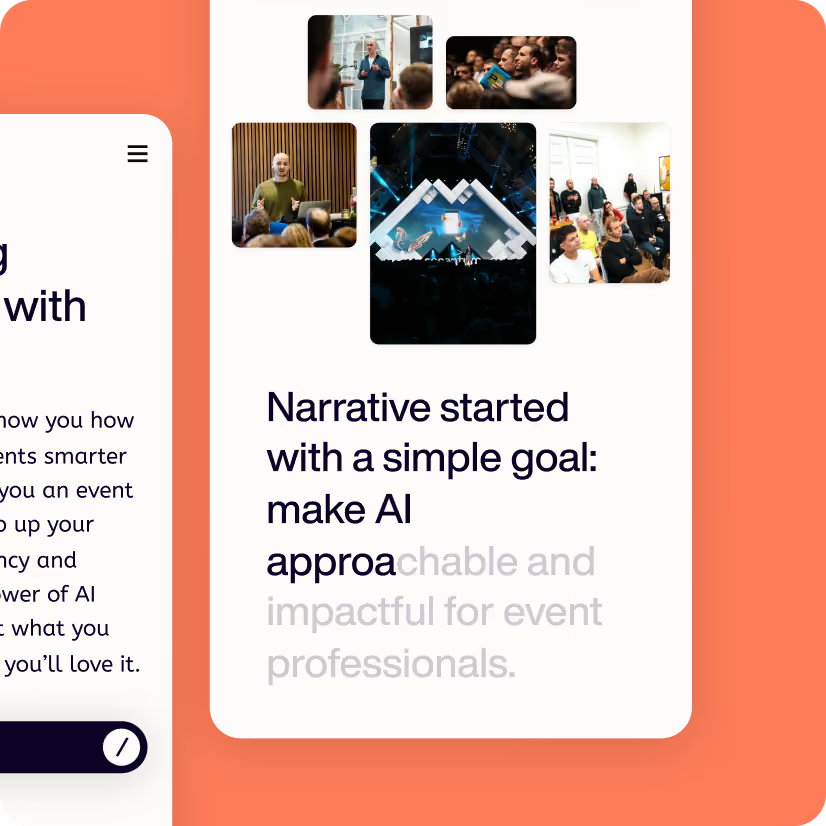
Pencil had outgrown its own website. Founded in 2018 by a team from Google, Facebook and Uber, and acquired by The Brandtech Group in 2023, the company had evolved from an ecommerce tool into an enterprise platform used by four of the world's ten largest advertisers. The site still told the ecommerce story. One page served three different buyers, none of whom had a clear conversion path, and the CMS forced the marketing team to work around its own structure. The company was invisible in the exact category it was built to serve.
A major industry milestone was set for June 2025. The refreshed brand was ready. The deadline could not move.
The moves
Built to publish without Noco.
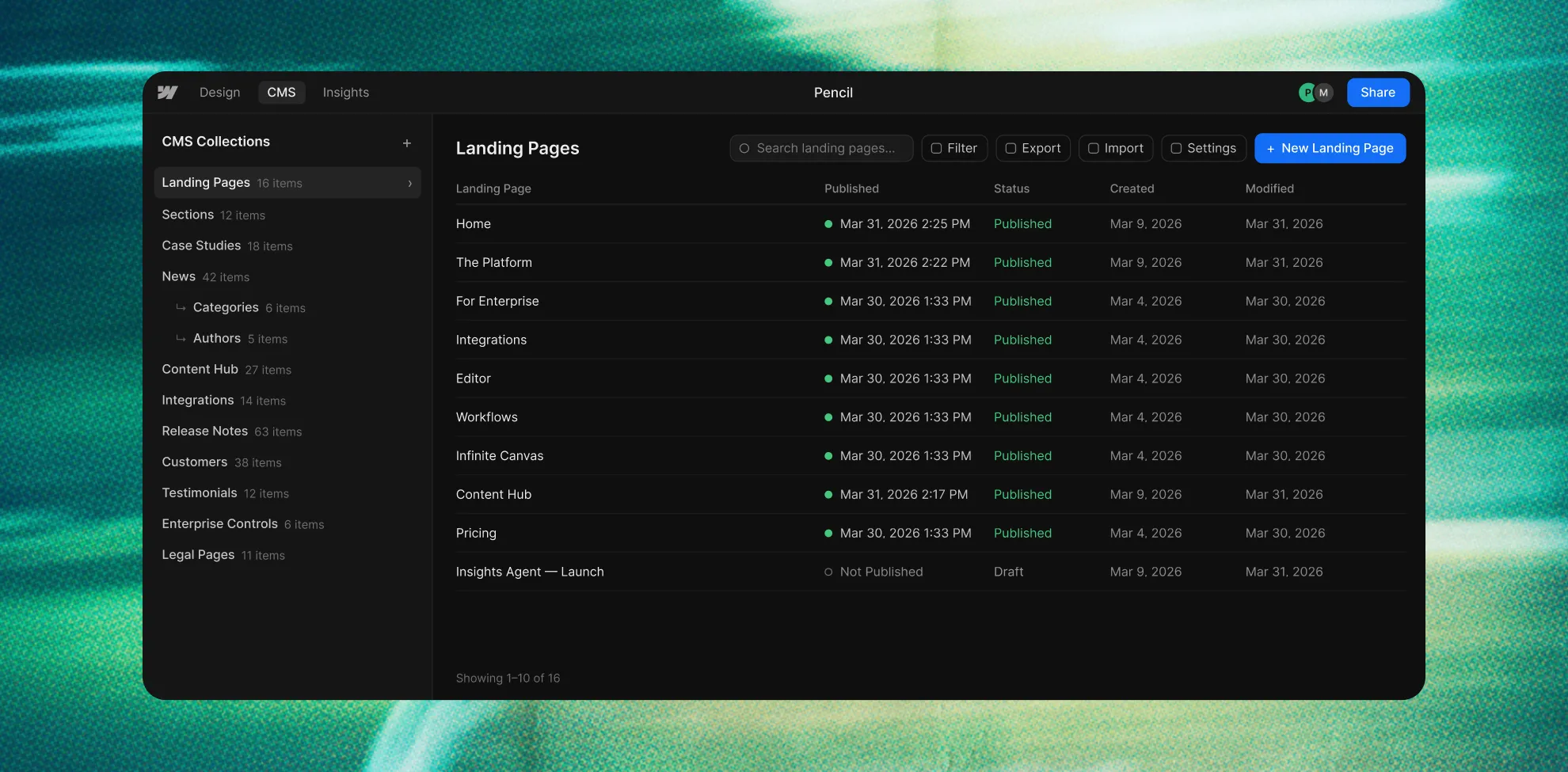
The site had to keep moving as fast as the product after the sprint ended, so the build treated the marketing team as the primary user: modular sections, scalable CMS templates, a component library that assembles into landing pages with no dev cycle. The migration shipped with a redirect strategy that protected existing SEO equity. GA4, GTM and conversion routing were configured from day one.
Fourteen months later, Pencil's marketing team still ships landing pages without waiting on a developer. That single operational fact is how a six-week sprint became a growth engine.
One site, three audiences.
The site had to keep moving as fast as the product after the sprint ended, so the build treated the marketing team as the primary user: modular sections, scalable CMS templates, a component library that assembles into landing pages with no dev cycle. The migration shipped with a redirect strategy that protected existing SEO equity. GA4, GTM and conversion routing were configured from day one.
Fourteen months later, Pencil's marketing team still ships landing pages without waiting on a developer. That single operational fact is how a six-week sprint became a growth engine.
Written for humans and the machines that answer them.
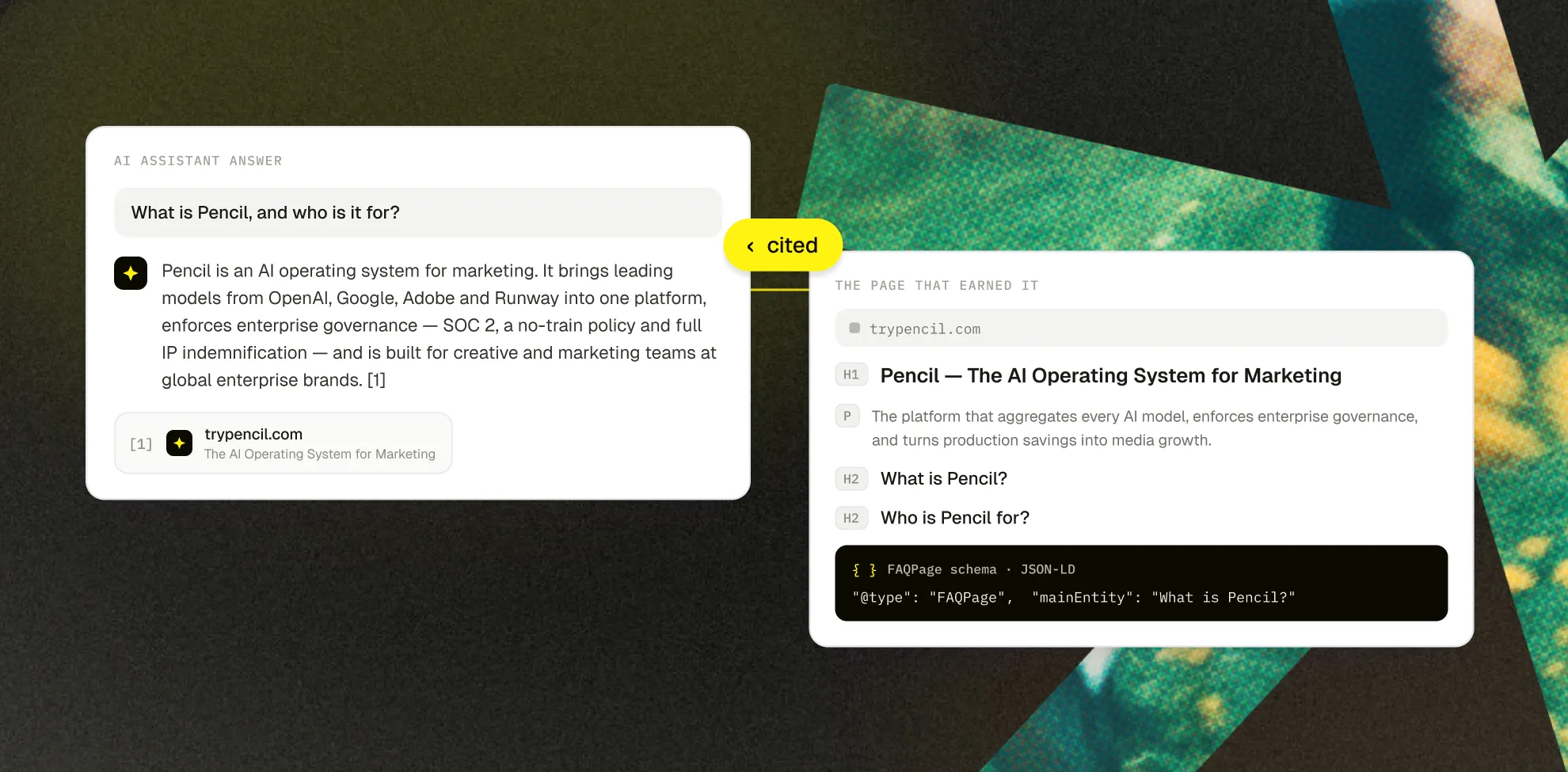
By 2026, nearly a thousand sessions a month arrived at trypencil.com from AI assistants. Those visitors met Pencil inside an answer before they met the website. The content hierarchy was built for both readers: descriptive headings, clear definitions, question-led formatting, structured schema throughout. A person scanning the page and an answer engine parsing it reach the same conclusion about what Pencil is and who it serves.
Design that demos the product.
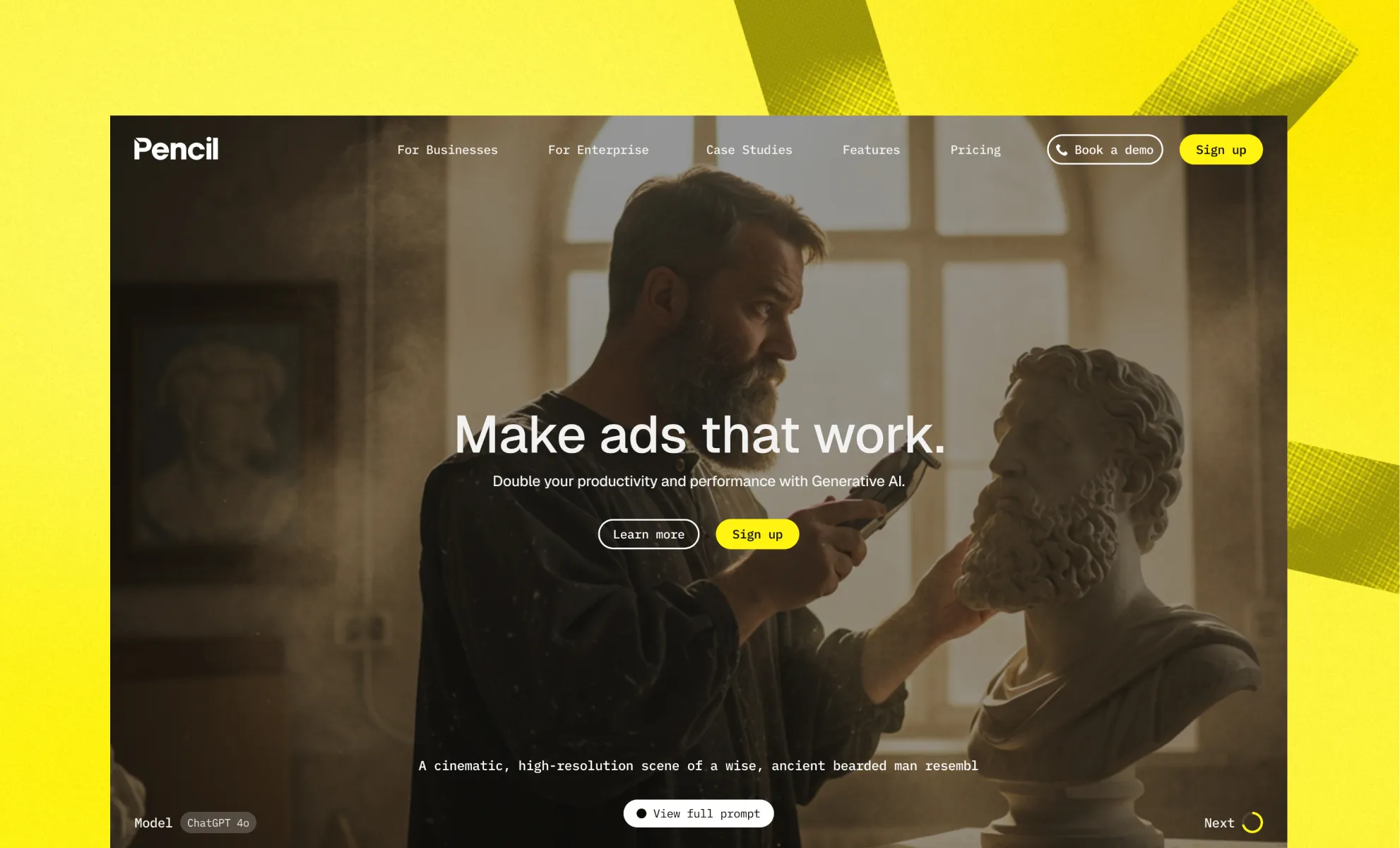
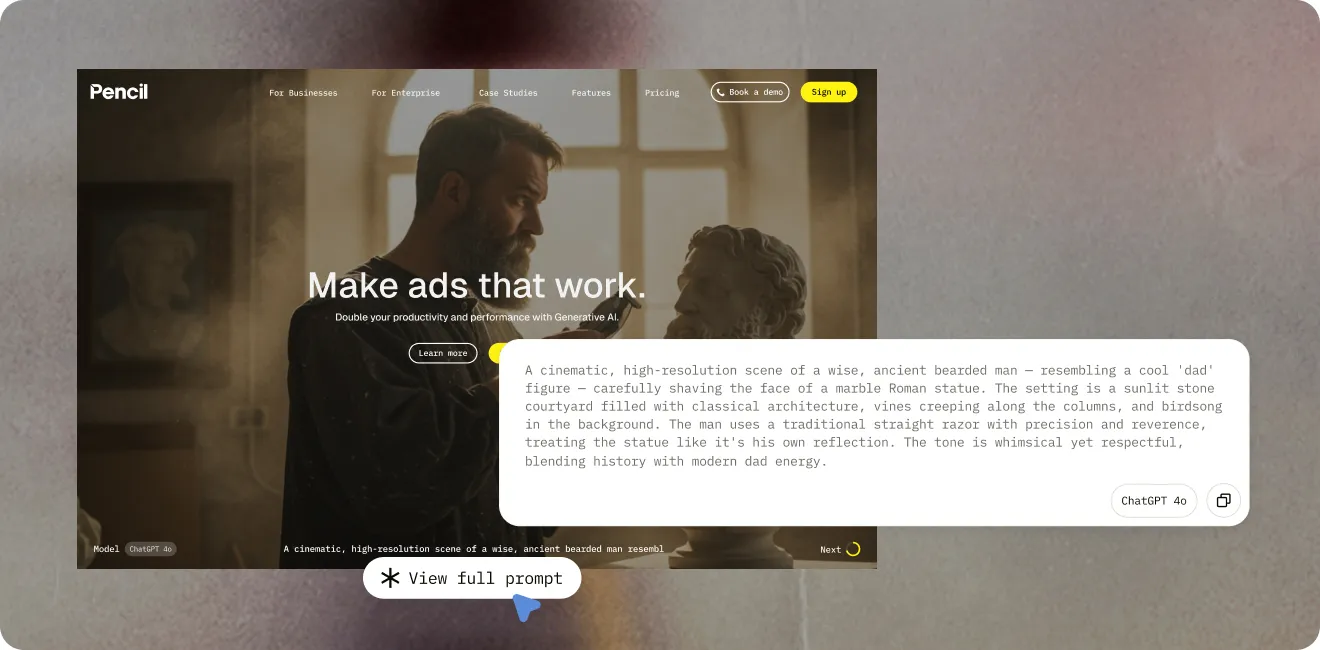
Pencil makes ads, so the site shows ads. The hero runs a video slideshow of real AI-generated creative behind a prompt-style interface that mirrors the product itself. The brand's scribble carries through the whole site as a deliberate design element. A visitor watches what Pencil makes before reading a word about it.
One direction was rejected along the way. A richer animated navigation was designed, then paused when video-heavy cards caused lag in testing. The lighter floating navigation won on UX.
The moment
The kickoff call was April 3, 2025: Will Hanschell (CEO), Sumukh Avadhani (CTO) and Tobias Cummins (COO) on Pencil's side. Scope was locked within a week. Design started April 14. The site went live June 14, ahead of the June industry event it had to be ready for. Six weeks, kickoff to live.
The launch set the baseline. Everything below happened after it.
What happened
Organic search sessions grew 155% from July 2025 to February 2026. The mechanism is the CMS restructure, the redirect strategy that preserved existing equity, and the content hierarchy that gave every buyer segment its own indexed surface. Noco's evidence ledger shows 11,450 organic sessions in August 2025, the first full month after launch. The March 2026 peak was 39,151. The published figure is conservative against the underlying data.
LLM-referred traffic grew 522% since launch, from 157 to 981 sessions per month. The mechanism is the answer-engine content structure. We treat this figure as directional; the reasons are in the next section.
The marketing team ships landing pages with no dev queue. No percentage attached. It is the mechanism behind the organic number: new pages go live on the marketing team's schedule, and the indexed surface keeps growing.
The engagement expanded. The results justified more investment, and the PRO subscription grew into PRO+ effective May 2026. The site kept pace with the product because someone kept working on it.
”Noco came through for us when it counted. We had a tight deadline and a complex product to communicate. The speed and quality were real, and the ongoing support has kept our website moving as fast as our product.”

The honest part
AI-referral measurement is imperfect. Assistants strip or obscure referrer data, some of that traffic lands as dark traffic, and month-to-month numbers swing more than classic organic search. The 522% figure is real in our analytics. It also starts from a base of 157 monthly sessions, which is exactly the condition where percentages flatter. So we treat it as a directional signal and let the organic sessions number carry the growth claim. We would rather publish one hard number and one honest one than two impressive ones.


Quick answers
Six weeks: did quality suffer for speed?
No. Scope was locked in the first week, design started April 14, and the site launched as a fully modular Webflow platform that Pencil's marketing team still ships from independently, fourteen months later.
Is +522% LLM-referred traffic real growth or a small-base illusion?
Some of both, which is why it is framed as directional. The underlying data shows 157 monthly sessions growing to 981. The harder number is +155% organic search sessions over eight months, backed by fourteen months of GA4 data.
What does the subscription do after launch?
It turns the site into a growth engine. The marketing team publishes landing pages with no dev cycle, the content and CMS structure keeps compounding organic traffic, and the site evolves as fast as the product does.
Why segment into two audience paths?
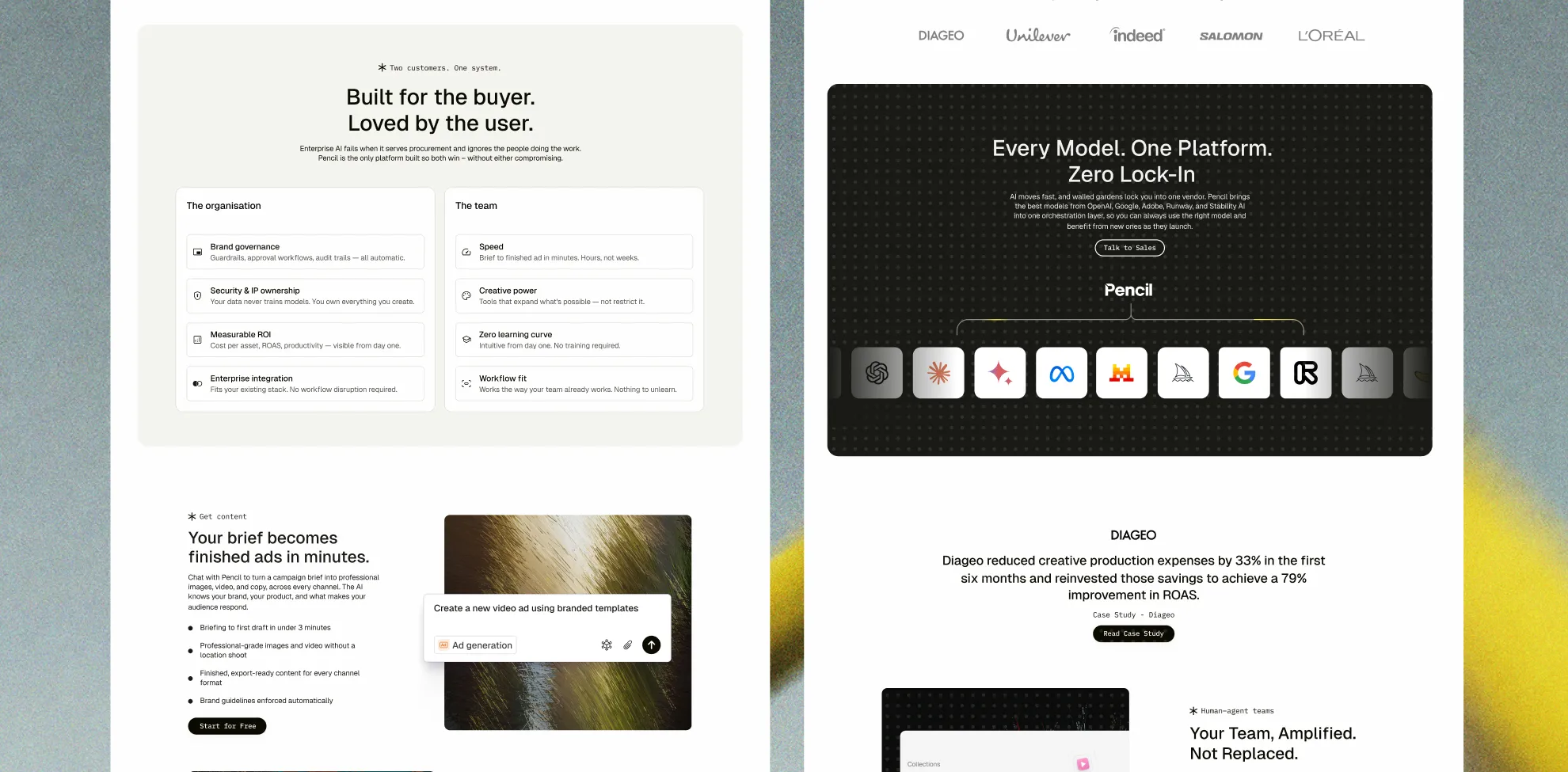
Enterprise buyers, internal champions and creative users have different jobs to be done, and one message converted none of them. Dedicated For Businesses and For Enterprise pages give each buyer its own proof and its own conversion path.
Who this is for
This engagement fits a B2B software company whose product has outgrown its website: enterprise deals moving through the pipeline while the site tells last year's story, a hard external deadline, and a marketing team that needs to ship without a dev queue.
The shape is an Enterprise Website Sprint for the rebuild, followed by a PRO subscription that keeps it compounding.
Make your next move. Today.


Make your next move. Today.
Momentum is created in the first conversation. When the energy matches, everything else accelerates.
.webp)