-p-500.webp)


.svg)
The website its founders run themselves
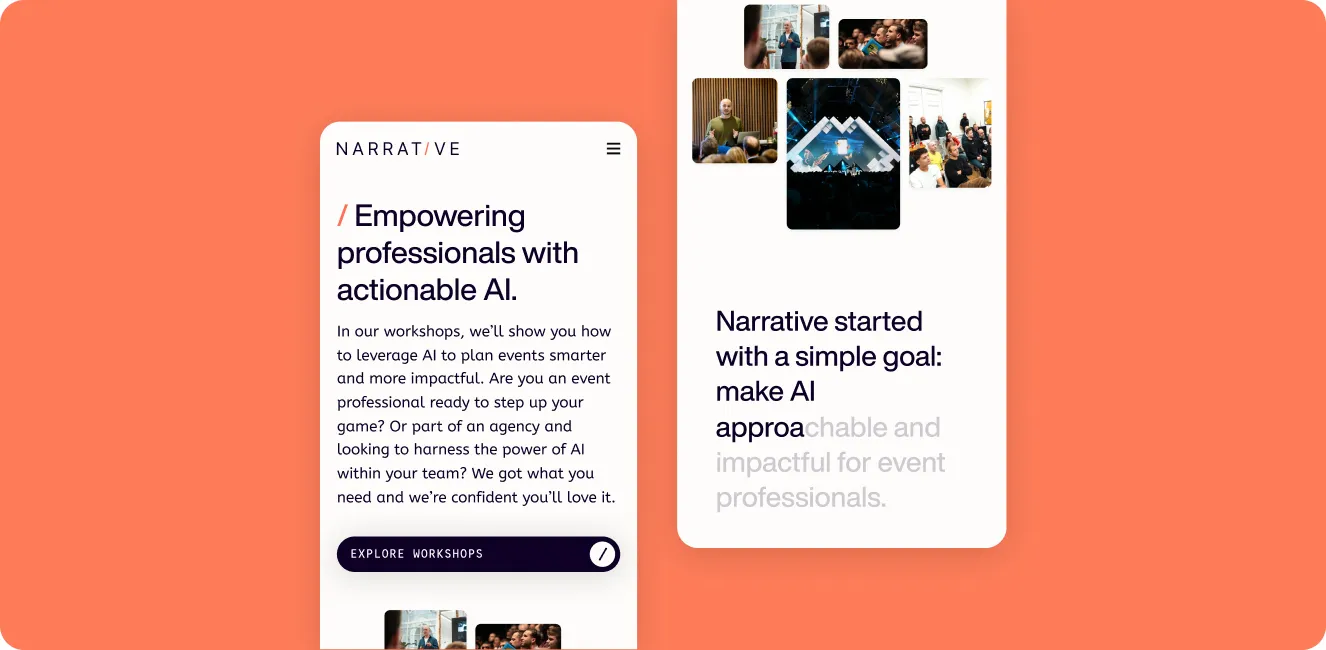
Noco is a Webflow agency for B2B SaaS, tech and AI companies. For Narrative, the Dutch company that makes generative AI practical for event professionals, we ran a Brand Sprint, designed and built their Webflow site from zero, and handed it over so completely that the founders now design pages, publish content and wire up their own automations without us.
.avif)


Where this started
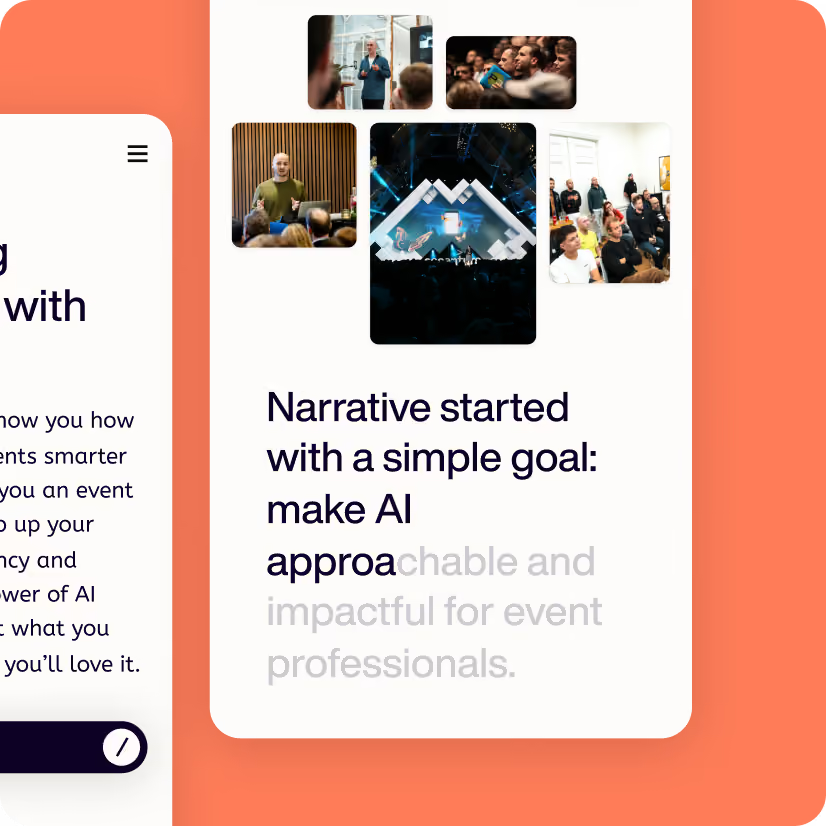
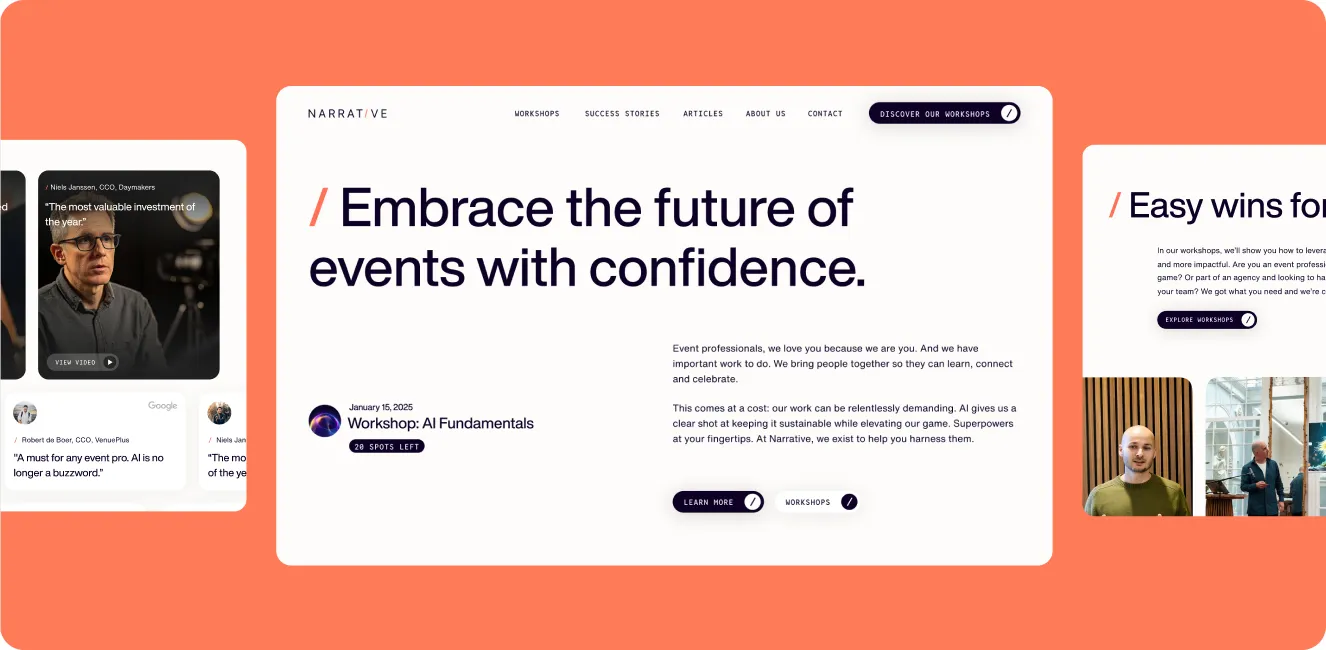
Two event-industry veterans built a company teaching event professionals how to actually use AI: workshops first, then hands-on modules and automations. Their audience is the Dutch events industry, a market that runs on reputation and recognition. They had the credibility. They had no brand articulation, no website, and a product lineup that was still finding its shape.
And one more requirement, unusual for an agency client: they wanted to run the site themselves afterward. Not “be able to edit a headline”. Run it.
Position first, then pixels.
The Brand Sprint came before any design: a purpose session, then value-proposition sessions that mapped exactly who the workshops serve and why they buy. Those outputs went straight into the site structure and the copy. The website is the messaging framework, laid out in pages.
Built to be taken away.
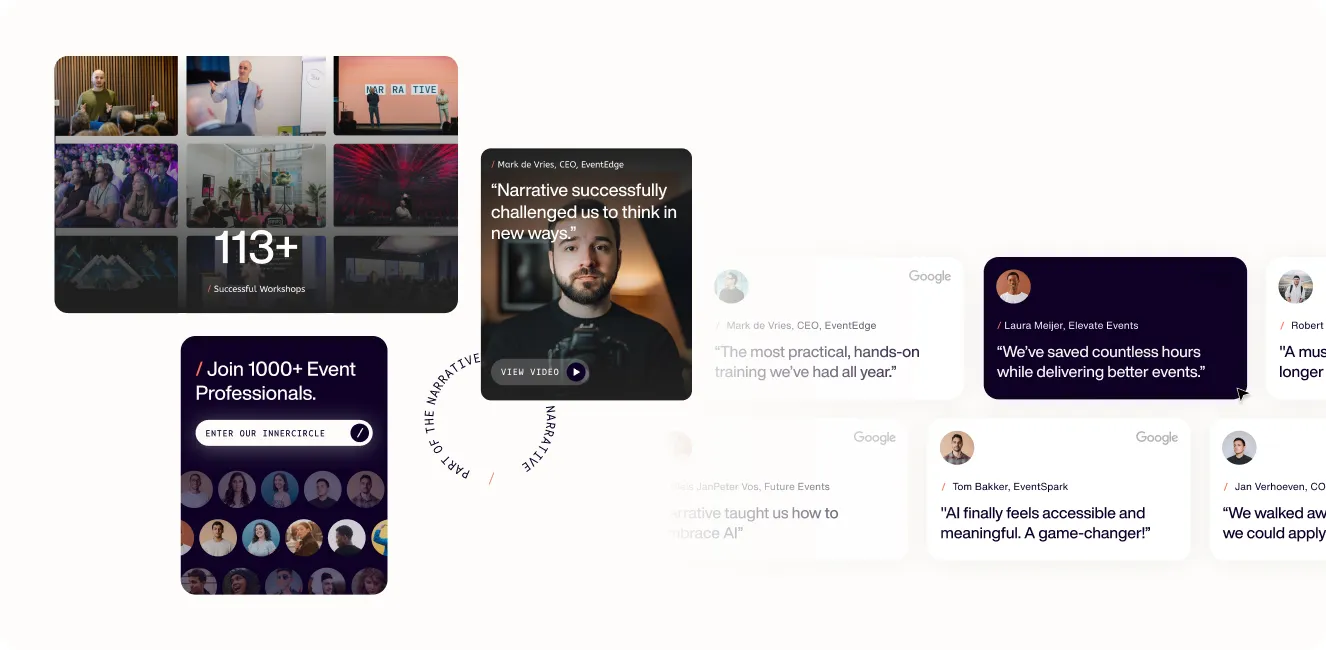
The site was built in the customer's own Webflow workspace and handed over with recorded walkthroughs for everything: domain, plans, project navigation, page building. Every fix came with a Loom showing how, so the next fix would not need us. Today the founders populate collections, ship pages and connect their own automations to the site. That was the spec, and it held.
Proof by peer group.
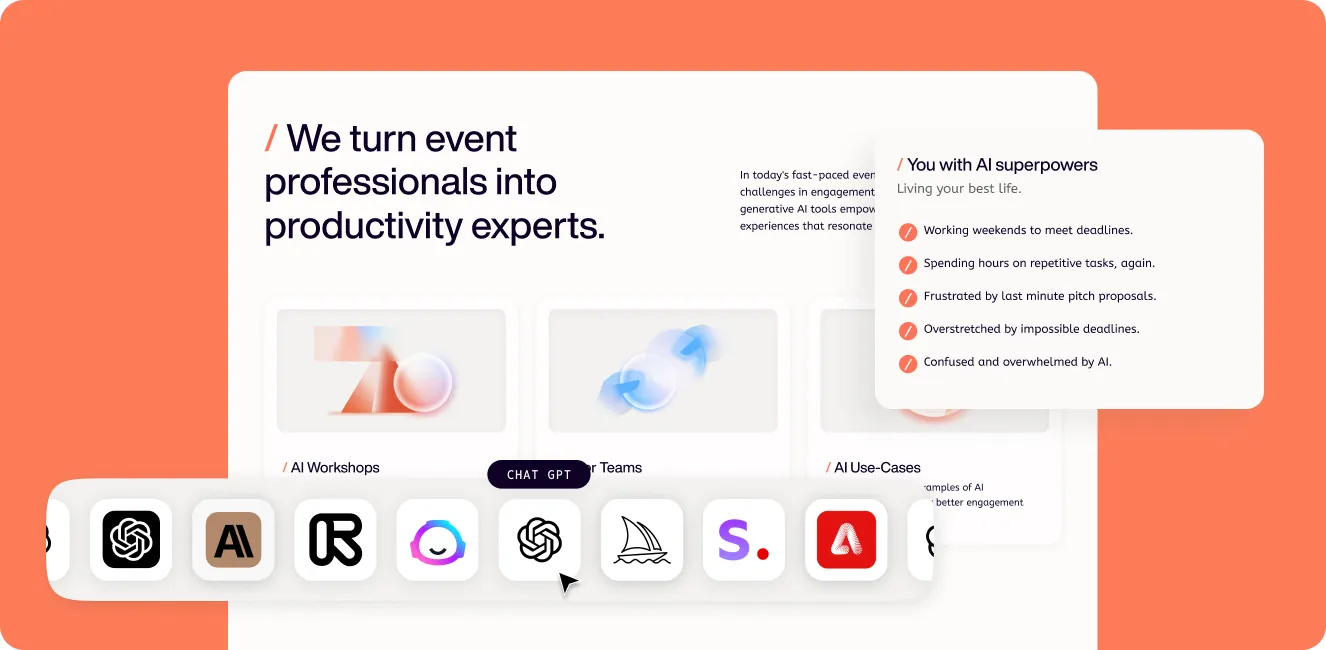
In a market built on recognition, the Clients page was designed around one test: a visitor should immediately see their own kind of company represented: agencies, venues, organizers, suppliers, institutions. Not a logo wall. A mirror.
The site moved when the offer moved.
Within the first year, Narrative's offer evolved from three workshop formats toward outcome-specific modules, built automations and a tools library. A Feature Sprint restructured the site around the new lineup, with one hard design rule from the founders: the boundary between education (Modules) and built solutions (Agents) must be unmistakable. It is.
The shipping log
Brand Sprint — Q4 2024, Project Based. Purpose, messaging and value-proposition work in November 2024. The outputs became the skeleton of everything after: site structure, page copy, the pitch for every workshop. Handed into the website sprint without a seam.
Zero-to-One Website Sprint — Q4 2024 to April 2025, Project Based. Eleven page templates designed and built in Webflow, from homepage to workshop product pages to content hub, in two languages. Transferred to Narrative's own workspace in February, live April 8, 2025, launched publicly by the founders themselves. Handed over with the keys, the Looms and the partner setup.
Feature Sprint — July to November 2025, Project Based. The offer had evolved; the site followed. New Modules, Agents, Library of Tools and Clients pages, restructured navigation, and a sharper split between what Narrative teaches and what it builds. Closed out with nothing pending on either side.
What happened
- The founders run the site. Since handover, day-to-day publishing, CMS work and integrations run in-house. New workshop pages, articles and automations ship without an agency in the loop.
- The site kept pace with a moving business. Three engagements in twelve months tracked the company from workshop provider to AI consultancy, without a rebuild.
- The launch carried publicly. The founders announced the site on LinkedIn and called it a springboard for the next phase.
”As a startup in the AI space, having a website that clearly explains what you do is everything. Noco gave us that. The Brand Sprint built the foundation and the site they delivered on top of it finally reflects where we are taking the company. It gave us a real springboard to keep building from."

The honest part
We launched the site English-first. Narrative's business is about 95 percent Dutch, and the geo-redirect that papered over the choice caused indexing problems in Search Console. Wrong call, ours. We switched the primary locale to Dutch a month after launch and cleaned up the indexing. The site has been Dutch-first since, with English as the secondary. It cost a few weeks of search visibility and taught us to settle locale strategy before launch, not after.
Quick answers
What did Noco build for Narrative?
A brand foundation (Brand Sprint), then a full Webflow site: eleven page templates from homepage to workshop product pages and content hub, in Dutch and English, with ticketing and newsletter integrations. A later Feature Sprint added the Modules, Agents, Library and Clients sections.
Can the customer really maintain the site without Noco?
Yes, and this customer does. The site lives in Narrative's own Webflow workspace, handover included recorded walkthroughs of everything, and the founders publish pages, populate the CMS and connect automations themselves.
How long did the website take?
Design and build ran from late 2024, with handover in February 2025 and public launch on April 8, 2025. The pace was set together with the founders, who were building the content alongside.
What stack does partofthenarrative.com run on?
Webflow and Figma, with Ticket Tailor for workshop ticketing and Kit for the newsletter. Dutch is the primary locale, English secondary.
What does this engagement look like?
A Brand Sprint into a Zero-to-One Website Sprint, then Feature Sprints whenever the business changes shape. Project-based throughout; the customer owns and runs everything in between.
Make your next move. Today.
Momentum is created in the first conversation. When the energy matches, everything else accelerates.

.webp)