

-p-500.webp)


.svg)
The website that survived a $234M acquisition
Noco is a Webflow agency for B2B SaaS, tech and AI companies. For Edge Impulse, the edge AI and MLOps platform acquired by Qualcomm, we have run the website as an embedded team since 2021: design, Webflow development and CRO under an ongoing PRO subscription.




Where this started
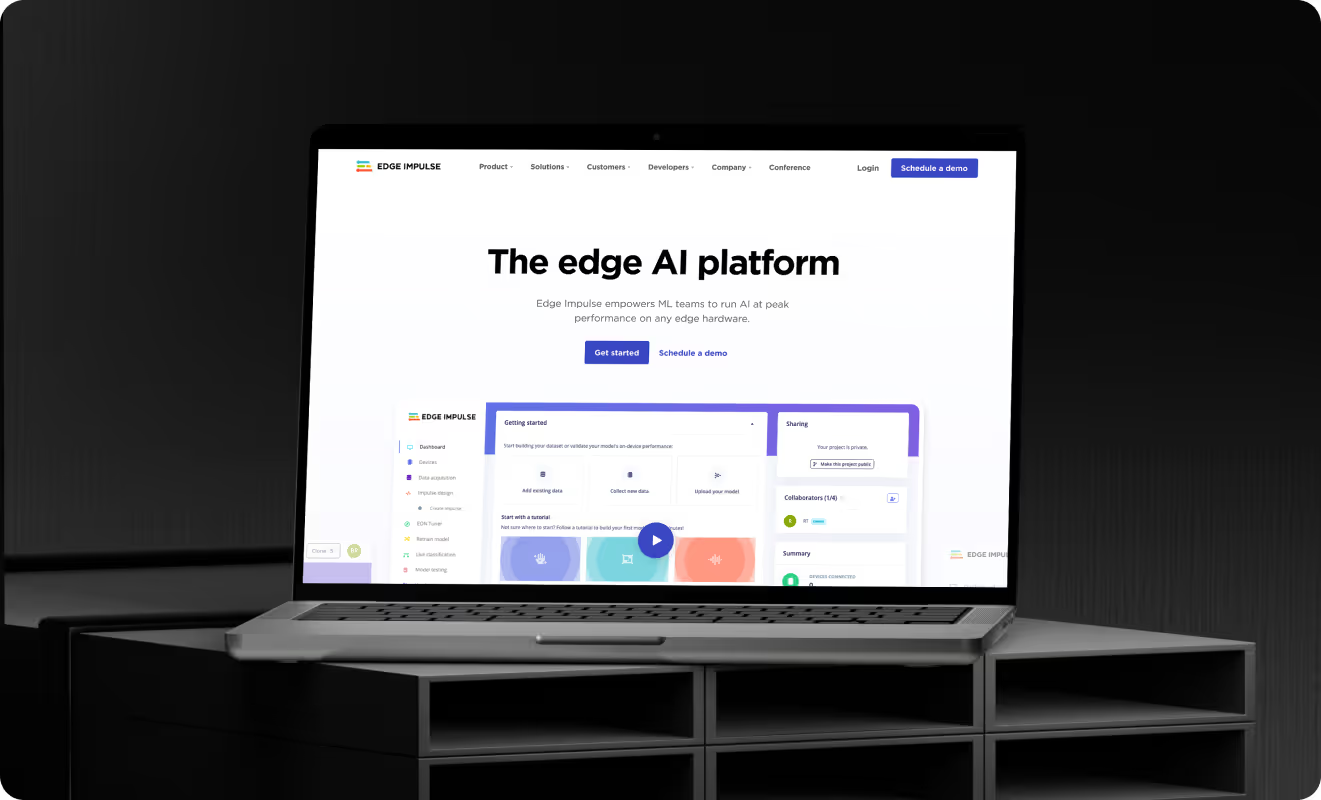
In 2021, Edge Impulse was a developer platform with a custom-built website. Every page, every campaign, every fix went into the engineering queue behind the product. Marketing requests waited months. The company was growing toward 100,000 developers and 1,000+ enterprise customers. The website was not growing at all, because the people who owned its content could not touch it.
Co-founder Jan Jongboom brought us in. Not for a redesign. For a different operating model.
Kill the queue, keep the culture.
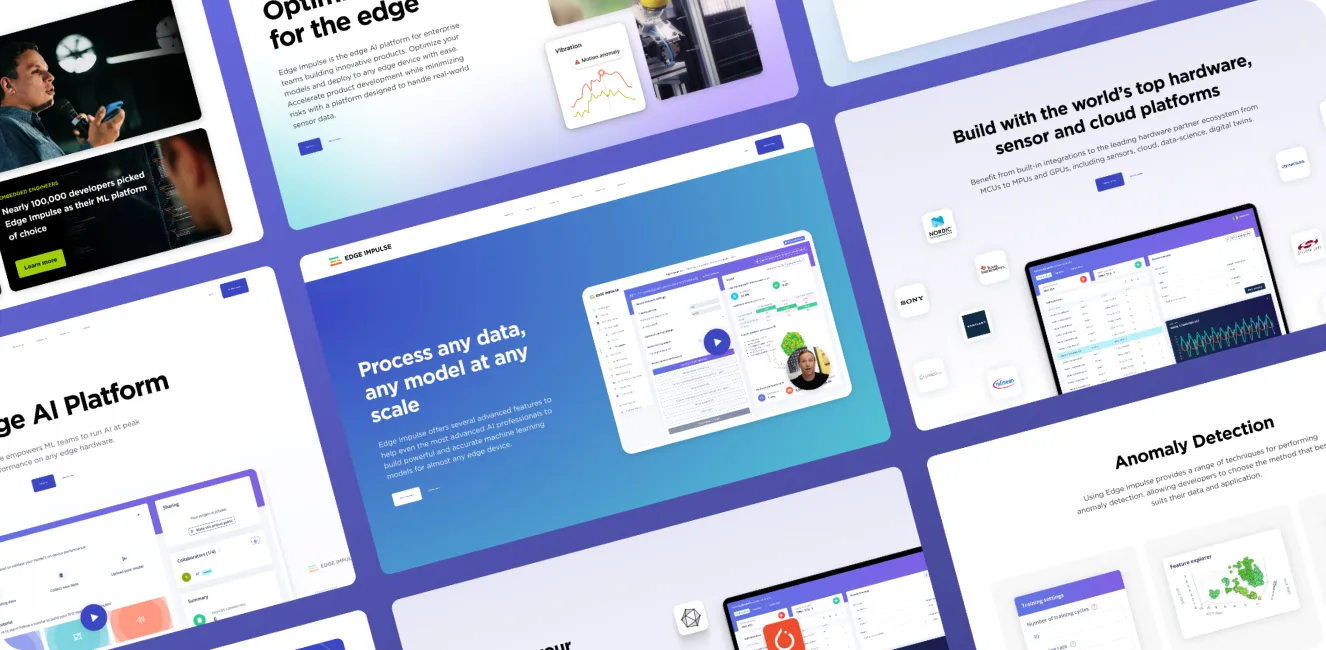
We rebuilt the site on Webflow with one test for every CMS structure and component: can a marketer ship this page alone? Clear naming, reusable components, structured collections. Engineering kept building the product. Marketing started shipping the website.
Templates for every repeatable page.
Landing pages, event sites, case studies, product updates. Each got a standardized template. Pages that used to take months now go live in about a week, most without us involved.
Reposition mid-flight.
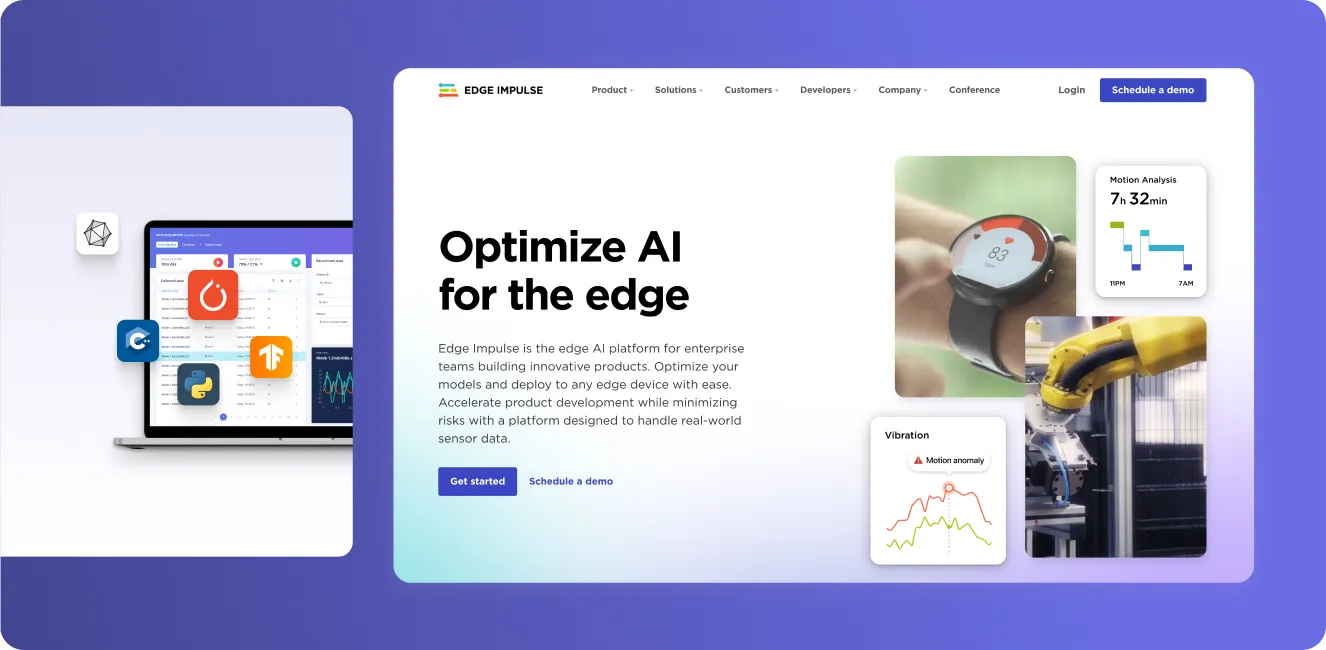
Halfway through the partnership, Edge Impulse pivoted from developer-first to enterprise sales. That is the moment most websites quietly become lies: the product moves, the site does not. We rebuilt the homepage messaging, restructured navigation around buyer entry points, and rewrote feature copy into outcome copy. Then we added an ROI calculator, so enterprise buyers could quantify adoption before talking to sales.
Embedded, not on-call.
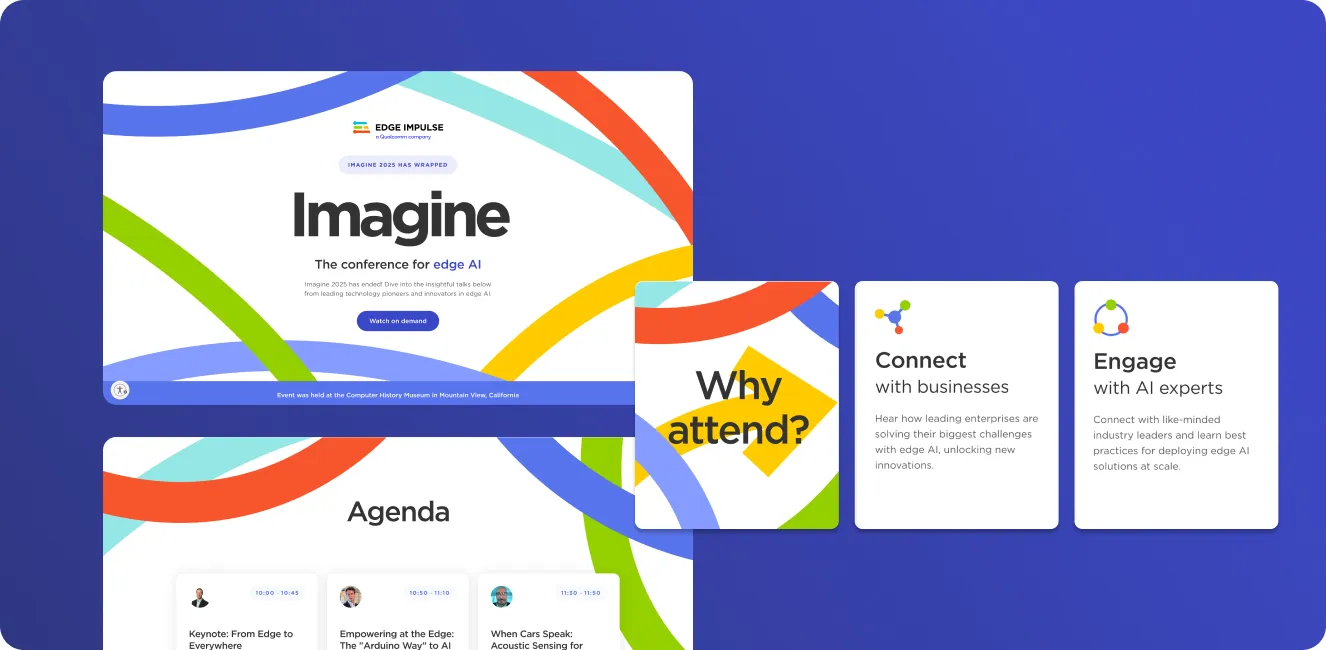
The Imagine Innovators conference site ran for multiple years: speaker changes, agenda updates, registration integrations, live streams, real-time support on event days. When the Developer Library needed live API-synced filtering, we integrated a custom VueJS build into Webflow without giving up performance or a clean CMS.
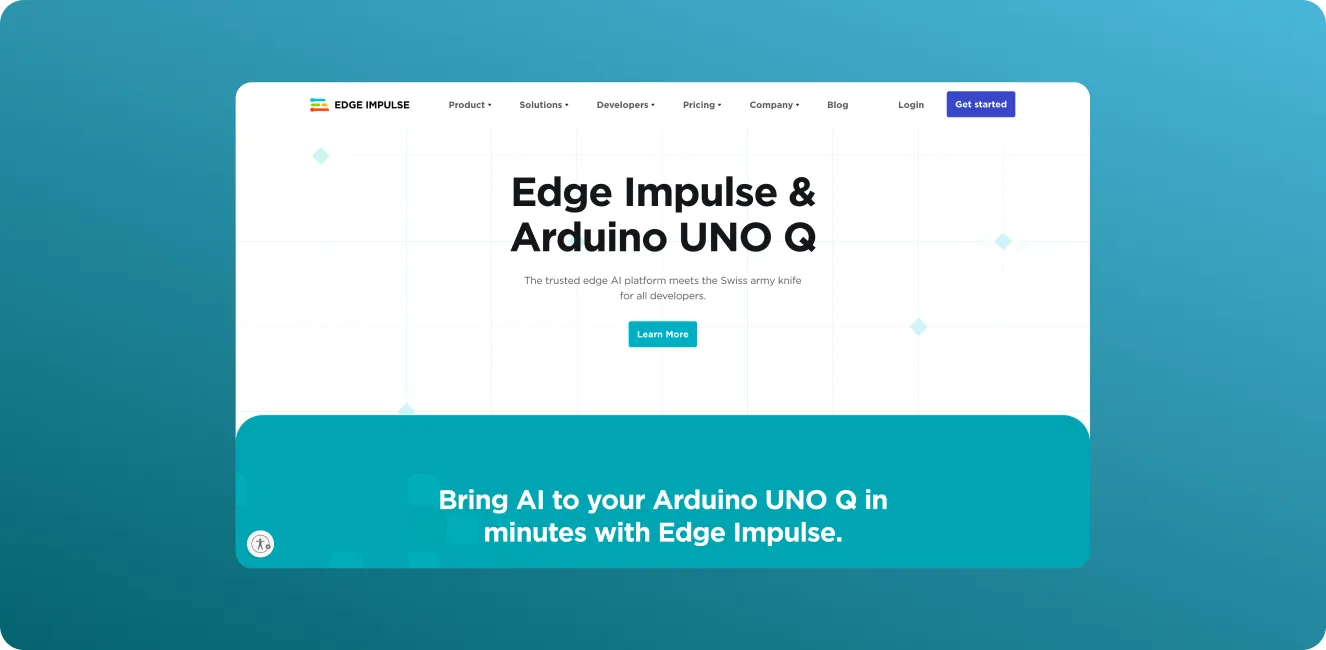
The shipping log
The rebuild — 2021, Project Based. A custom-built site moved onto Webflow with one rule for every component: a marketer can ship it alone. The queue died with the old stack. Handed to a marketing team that could finally touch its own website. Then the log started.
PRO Subscription — Monthly since 2021, Continuous. Four years, 847+ tasks, and the two events that usually end agency relationships. The pivot to enterprise: homepage, navigation and copy repositioned while the product moved underneath them. Then March 10, 2025, 9:00 CET: Qualcomm announced the acquisition, and the website flipped the same morning, new positioning prepared under embargo, live to the minute. By July 2025, Noco passed Qualcomm's vendor security review and ships inside the compliance requirements of one of the world's largest chipmakers. Still shipping.
What happened
- 847+ tasks shipped across four years of continuous subscription work. The site never needed a restart.
- Page volume grew 300%+ with no added marketing engineering headcount. The operating model scales instead of the queue.
- Page turnaround went from months to about a week. Standard pages ship without us.
- The partnership held through a repositioning and a $234M acquisition. Those are the two events that usually end agency relationships.
”Noco has been a great partner in scaling our website as fast as we were growing our business and product. Highly recommend for any SaaS business that aspires to scale rapidly."

The honest part
The pivot meant rewriting pages we had shipped months earlier. That is the cost of a website that keeps telling the truth. And Qualcomm-grade procurement changed how we work: stricter paperwork, security reviews, slower cycles. We adapted. Being easy to buy from is part of the job at enterprise scale.
Quick answers
How long has Noco worked with Edge Impulse?
Since 2021, under an ongoing PRO subscription. 847+ tasks shipped across four years, through multiple funding stages and the Qualcomm acquisition.
What did Noco build for Edge Impulse?
A Webflow platform with scalable CMS architecture and a component library the marketing team publishes with independently. Plus conference microsites, an ROI calculator, a VueJS-powered Developer Library embed, and the full enterprise repositioning of messaging and navigation.
What stack does the Edge Impulse website run on?
Webflow and Figma, with custom VueJS embeds where native functionality ends. Post-acquisition: Adobe Analytics and OneTrust, per Qualcomm requirements.
What happened to the website when Qualcomm acquired Edge Impulse?
It repositioned the same morning as the announcement, prepared under embargo. Noco then handled the analytics migration, compliance implementation and vendor security review, becoming a formal Qualcomm vendor by July 2025.
What kind of engagement is this?
A PRO subscription: embedded design, Webflow development and CRO, month to month, one focused lane of work.


Make your next move. Today.
Momentum is created in the first conversation. When the energy matches, everything else accelerates.

.webp)