
Fix your B2B SaaS Brand in 3 Weeks
B2B SaaS companies invest heavily in engineering, product iteration, and paid channels, yet many remain invisible in saturated categories like AI, security, fintech, and data. The root cause is rarely the product itself. And even when it is, weak branding prevents teams from ever finding out. It blurs signal, kills momentum, and drags down everything that follows.
After working with 100+ B2B SaaS brands, we see the same pattern over and over. Growth stalls because of three failures:
- No clear purpose
- Messaging that does not land with your ICP
- Visuals that quietly undermine credibility
Let’s unpack them one by one. Then we will show how to fix all three, fast.
1. No clear purpose
Which real-world problem did you identify out in the wild? Why does your company exist beyond shipping features?
When a SaaS brand lacks a defined purpose, the entire go-to-market becomes reactive. Marketing chases competitors. Sales decks blur together. Internal discussions loop endlessly because there is no shared north star.
This shows up everywhere: vague homepages, taglines that could belong to any company in the category, founder stories that feel rehearsed instead of real. Prospects sense the lack of conviction within seconds and move on.
If your team struggles to explain what problem you exist to solve without opening a slide deck, you do not have a marketing problem. You have a positioning problem.
A clear purpose fixes this. It becomes the filter for decisions across product, marketing, and sales. Brands that lock in a strong why attract better-fit customers faster and align teams for longer. Without it, even strong products struggle to build momentum because the story never sticks.
2. Messaging that does not land
Do you have a messaging system built around the core pain points your ICP feels today?
SaaS messaging fails when it hides real value behind jargon, feature lists, or vague corporate language. Prospects scan a homepage or deck and still cannot answer one simple question: why should I care right now?
Here is what usually happens. A homepage leads with abstract capability statements that sound impressive but say very little. The moment of relevance never arrives, so attention drops before interest even forms.
Most messaging starts from the company’s perspective instead of the customer’s reality. It talks about what the product does, not what problem it removes or what outcome it enables.
High-performing SaaS brands flip this. They lead with customer language, clear pain, and a concrete desired outcome. When messaging hits, bounce rates drop, demos increase, and sales cycles shorten. Internally, teams stop debating wording because the framework is clear.
3. Visuals that undermine credibility
How comfortable are you showing real screenshots of your product UI on your website?
Most teams hesitate here. The UI may work well but look cluttered or dated. As a result, screenshots get blurred, cropped, or replaced with abstract visuals.
This creates a trust gap. Buyers want to see the real product to judge usability and workflow fit. When visuals feel evasive or inconsistent, confidence drops.
The problem gets worse without a system. One asset uses raw screenshots, another illustrations, a third heavily stylized mockups. The brand feels fragmented, and teams waste time recreating visuals for every new campaign.
Without a clear visual system, teams compensate ad hoc. Logos age poorly across touchpoints. Color and typography drift between assets. Product screenshots are treated differently every time, cropped here, blurred there, or replaced entirely. The result is inconsistency that quietly erodes trust and makes the brand feel less mature than the product actually is.
The impact is rarely obvious at first. It shows up gradually in weaker first impressions, lower confidence during sales conversations, and a growing gap between how strong the product actually is and how credible the brand appears.
How we’ve solved this for 25+ customers
Most B2B SaaS brands struggle because their story lacks clarity.
When purpose, messaging, and visuals are locked in, everything downstream moves faster and performs better. Decisions get easier. Execution gets sharper. Conversion improves because the story finally makes sense.
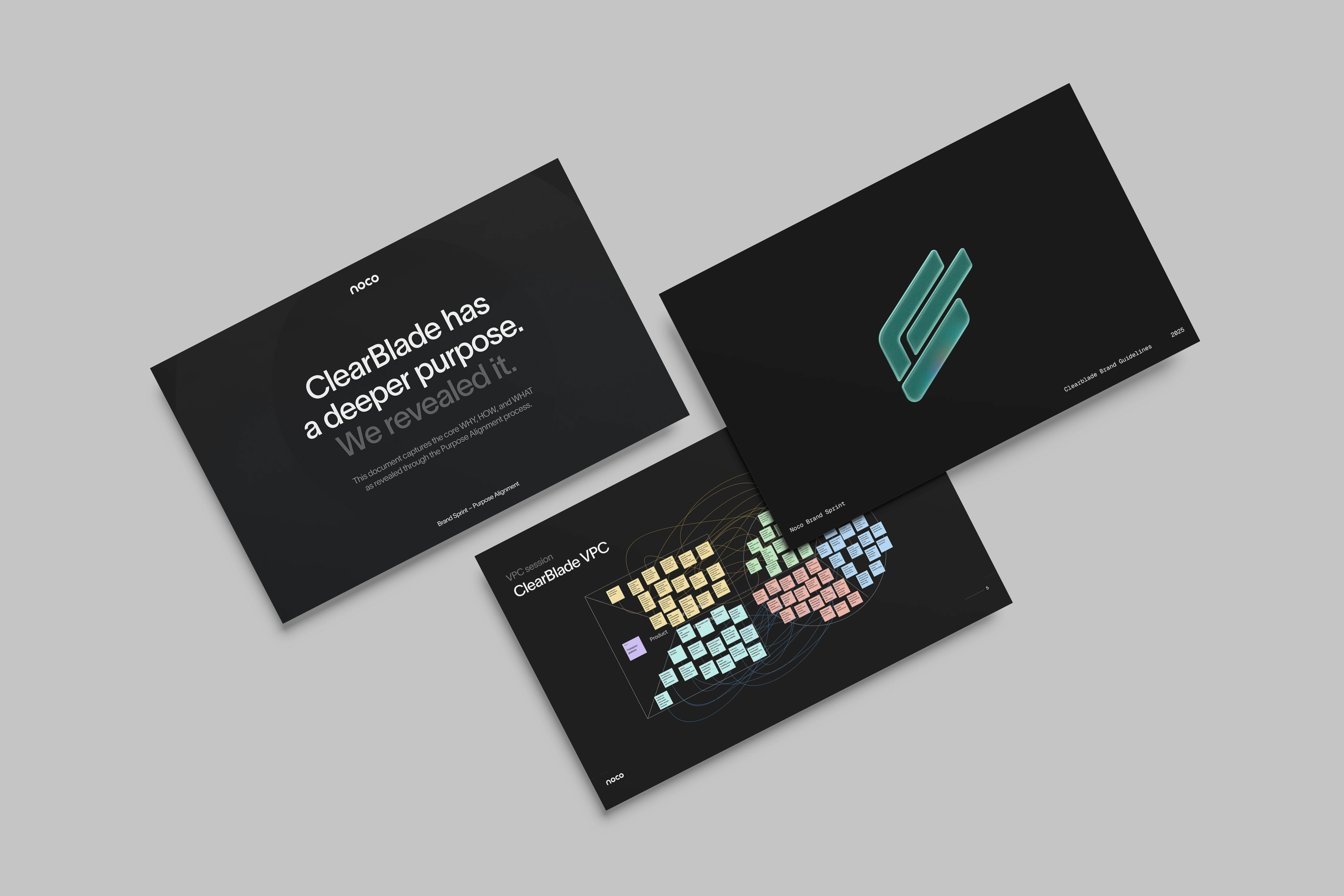
Our Brand Sprint exists to establish that clarity and turn it into a foundation teams can immediately build on.
At a high level, the sprint addresses the three failures directly:
- Purpose Alignment
We define the core problem you exist to solve and why it matters. This becomes the strategic anchor for positioning, storytelling, and prioritization. No fluff, no manifesto. One clear, directional purpose that holds. - Product Messaging Framework
We translate that purpose into customer-first messaging built around pain, gain, and job to be done. This creates a shared language across marketing, sales, and product. No more rewriting copy from scratch for every asset. - Visual Uplift
We align logo usage, typography, color, and product visualization into one coherent system. The goal is consistency and credibility across website, decks, demos, and campaigns.
The outcome is a brand that is clear, confident, and ready to perform.
Why this directly impacts your website performance
The Brand Sprint sits directly upstream of website performance and shapes how the site is structured, written, and designed.
With purpose, messaging, and visuals aligned upfront, we can:
- Define a sharper sitemap based on real customer intent, not internal assumptions.
- Move faster through wireframing because structure and priorities are clear.
- Integrate messaging directly into wireframes, making copy part of the UX instead of an afterthought.
- Deliver a meaningful copy pass during the wireframing phase, not weeks later.
- Design with confidence because visual rules and product representation are already set.
This is where brand work turns into conversion performance. Pages become clearer. CTAs become more relevant. Users understand what you do and why it matters within seconds.
Branding becomes tightly coupled to the website build and directly shapes how the site performs.
What results look like after a Brand Sprint
Teams see lower acquisition costs, sharper internal alignment, and marketing that lands harder. For Webflow or Framer sites, clarity multiplies performance from day one.
One Edge AI platform increased demo requests by 40% after clarifying its core problem statement, reframing customer-facing messaging around real buying pain, and standardizing how the product and brand show up across its website and sales assets.
A procurement platform saw higher-quality inbound demos and noticeably shorter sales cycles after restructuring its messaging and visual system ahead of a website rebuild.
Clear signs you need a sprint: prospects ask what you do more than once, team members describe the product differently, visuals feel off or amateur, and campaigns underperform despite solid targeting.
How many more quality leads can you afford to lose?
Every week your brand stays unclear, leads slip through the cracks. Prospects land on your site, skim, hesitate, and move on. Not because the product is wrong, but because the story does not land.
That cost compounds quietly. More spending to get the same pipeline. Longer sales cycles. Good-fit buyers who never raise their hand.
A Brand Sprint under our guidance is how teams stop deferring this problem and fix it at the root. It creates clarity that flows straight into your website, messaging and conversion paths.
FAQs
More reads
A practical guide for B2B SaaS teams choosing between Framer and Webflow, with clear recommendations, real insights from our experts and the data you need to pick the right platform for your next stage of growth.

.png)
Picture this: A prospect asks ChatGPT about your B2B SaaS product. The AI pulls data from across the web and... finds nothing useful. Or worse, it shows outdated third-party content instead of your actual site. This happens more often than you'd think. But there’s a dead-simple fix.

The world of Webflow and web design comes with its own unique vocabulary, and understanding these terms is crucial for effective communication between designers, developers, and clients.